It happens every year:
As soon as summer temperatures rise, walk-in coolers and freezers seem to run longer, cycle more often, and struggle to recover after busy periods.
For many operators, it feels like the system suddenly “got worse.”
But summer creates heavier load conditions for every walk-in:
- more heat entering through openings
- more humidity entering with that heat
- warmer product loads from deliveries
- more frequent traffic from busy season operations
So yes—walk-ins often run longer in summer.
The question is: Is it normal heavy operation… or a preventable efficiency issue?
Here’s how to tell—and what to check first.
Step 1: Know What “Normal Summer Run Time” Looks Like
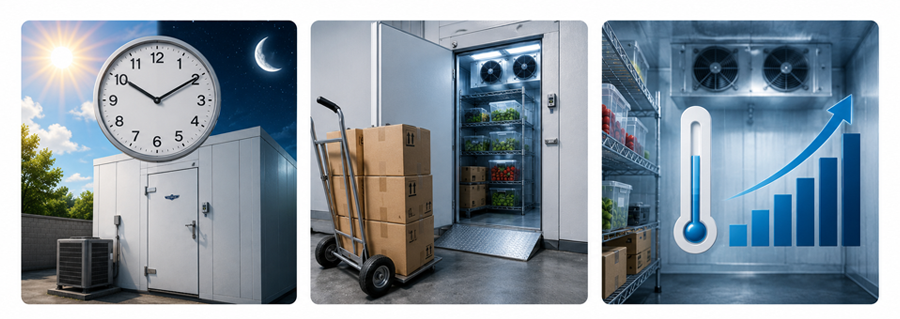
During peak heat, your walk-in may run longer simply because it has more work to do.
It’s normal to see:
- longer cycles during daytime hours
- slower recovery after deliveries
- increased runtime during busy traffic periods
That doesn’t automatically mean something is wrong.
But if the system runs constantly without recovering, or if temperatures drift outside safe range, it’s time to investigate.
Step 2: The 5 Most Common Reasons Walk-Ins Run Too Long in Summer
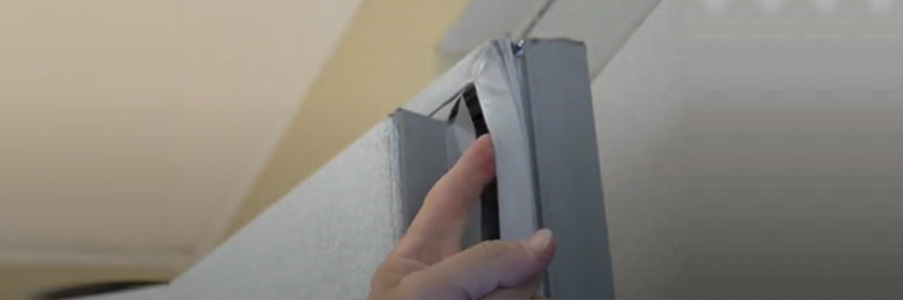
1) Door seals are leaking warm, humid air
This is the biggest one.
A small gasket gap can cause continuous heat gain—and in summer, the humidity makes it even worse.
Signs:
- condensation around the door frame (coolers)
- frost or ice near the entrance (freezers)
- moisture on floors near the threshold
- temperature spikes even without deliveries
What to check:
- gasket cracks or gaps
- corners pulling away
- stiff flattened sections that don’t compress
- airflow or light visible around edges
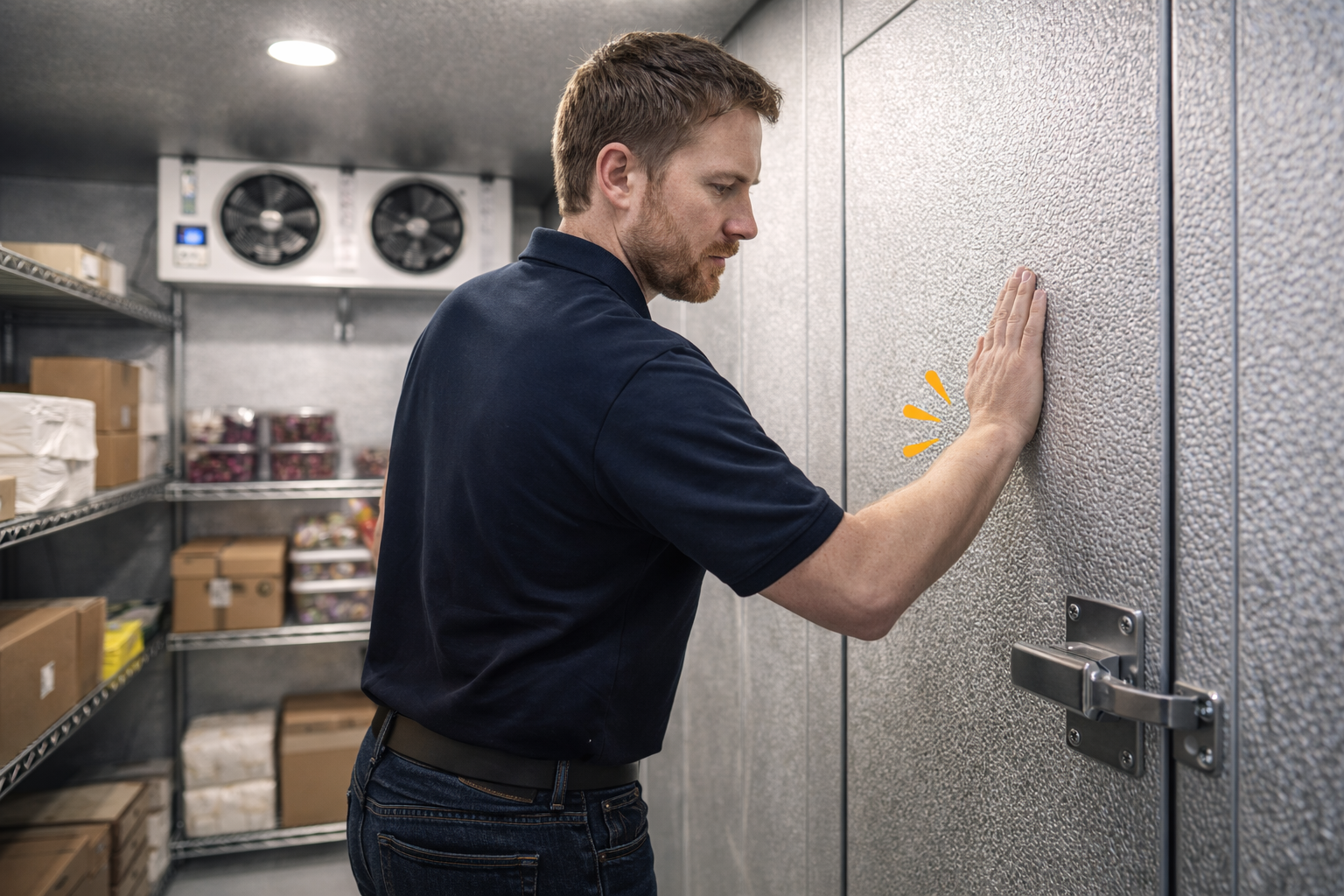
2) The door closes… but doesn’t pull tight
Many doors latch without sealing tightly.
This can happen when:
- the latch/strike is misaligned
- hinges sag slightly
- the closer doesn’t fully shut the door
Signs:
- door bounces back after closing
- staff has to “push it shut”
- door doesn’t feel snug when latched
- uneven gasket compression
Door alignment issues create constant infiltration—meaning the system is always fighting incoming heat.
3) Excessive door-open time
Busy operations mean busy walk-ins.
In summer, every extra second the door is open adds more warm air and humidity.
Signs:
- temperature rises during rush periods
- slow recovery after heavy traffic
- icing at entry points in freezers
Best fix: Reduce door-open time and consider strip curtains for high-traffic environments.
4) Blocked airflow inside the walk-in
Airflow impacts cooling efficiency and recovery.
When product blocks airflow near the evaporator or is packed too tightly, the walk-in may cool unevenly and run longer trying to stabilize.
Signs:
- warm zones inside the box
- longer cool-down times for product
- uneven temperatures depending on shelf location
- icing in unusual areas
What to check:
- clearance around evaporator fan discharge
- spacing between product stacks
- product pushed tight against walls and corners
5) Warm product load from deliveries
If deliveries arrive warm in summer, the walk-in must remove more heat.
Signs:
- temperature spikes after deliveries
- slow recovery times
- longer cycles the rest of the day
What helps: staged loading, smaller batches, and closing the door between loads.
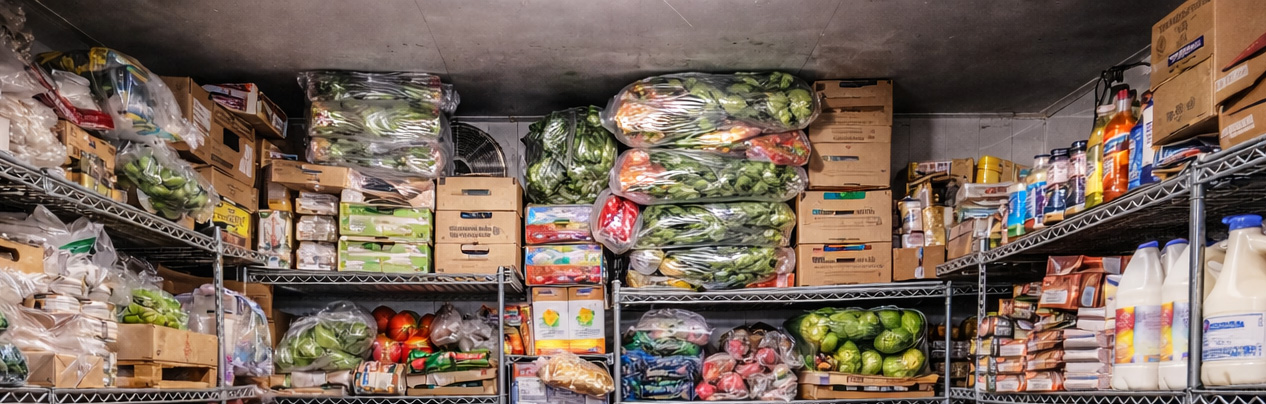
Step 3: A Simple “First Check” Walkthrough (10 Minutes)
Before assuming the system is failing, check these areas:
✅ Door gasket condition
✅ Door closes and seals tightly every time
✅ Sweep/threshold condition at the bottom
✅ Airflow clearance near evaporator
✅ Signs of moisture or ice at the entrance
✅ Walk-in organization for faster picking
Many summer performance issues come from a combination of sealing and workflow—not mechanical failure.
When It’s Time to Call for Service
If you’ve improved door habits, airflow clearance, and sealing—and the unit still won’t recover, you may need a professional inspection.
Call for service if:
- temperatures can’t reach set point
- the walk-in runs 24/7 without stabilizing
- icing is heavy and recurring
- unusual noise or cycling behavior appears
- product isn’t cooling properly even overnight
Final Takeaway: Summer Load Is Real—But Many Issues Are Preventable
Summer makes walk-ins work harder, but it also exposes small problems that are easy to ignore in cooler months.
If your walk-in runs constantly in summer, start here:
✅ check door sealing and alignment
✅ reduce door-open time
✅ protect airflow inside the box
✅ improve organization for speed
✅ use strip curtains for high-traffic spaces
A few small fixes can reduce runtime, stabilize temperature, and keep your system operating efficiently all season long.