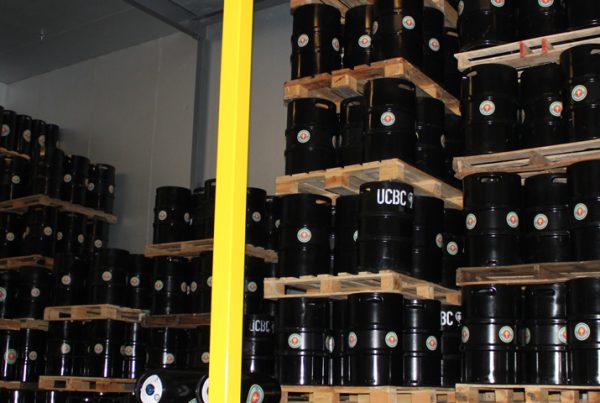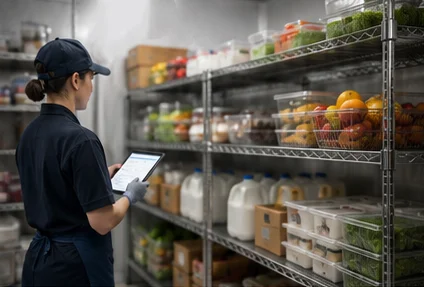

Cleaning a walk-in cooler or freezer might not feel like a “performance upgrade,” but it absolutely is.
A clean walk-in isn’t just about presentation—it directly impacts:
- airflow and temperature consistency
- employee safety
- product rotation and inventory control
- moisture prevention
- long-term durability of your equipment and panels
In fact, many walk-in issues that lead to service calls start with something small that could’ve been prevented through simple routine upkeep.
In this article, we’ll break down why cleanliness matters more than people think, what areas cause the most problems when ignored, and how to maintain a cleaner, more efficient walk-in without adding major time to your schedule.
Why Clean Walk-Ins Perform Better
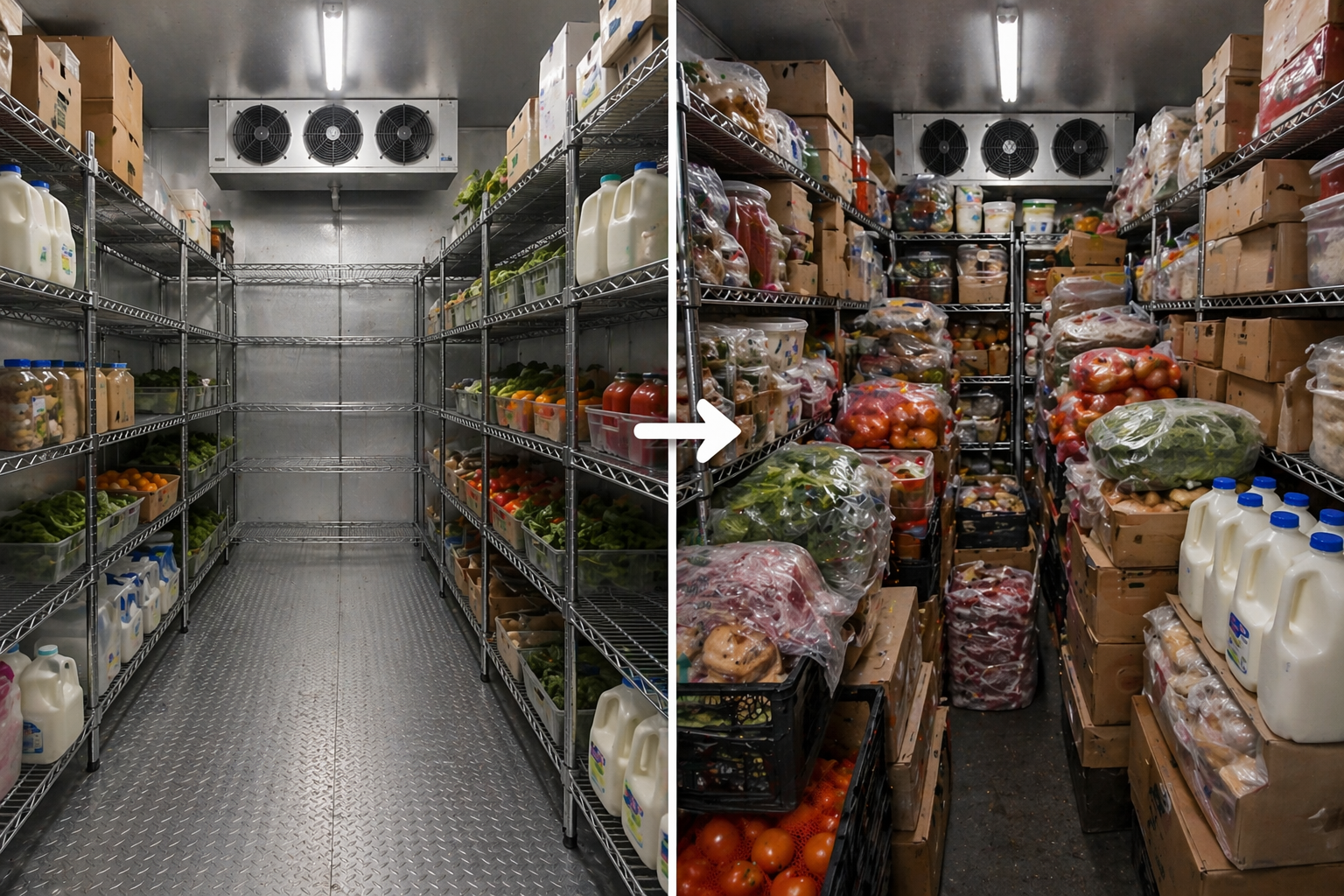
Walk-ins are designed to maintain stable temperatures by circulating cold air and controlling moisture. But when buildup occurs—whether it’s cardboard dust, spills, ice, or clutter—it interferes with how the walk-in operates.
A dirty or disorganized walk-in can cause:
- blocked airflow paths
- longer recovery times after stocking
- hidden condensation and moisture damage
- slippery, unsafe floors
- poor product rotation and waste
Cleanliness supports both performance and reliability.
The Most Common Walk-In “Cleanliness Problems” That Cause Real Issues
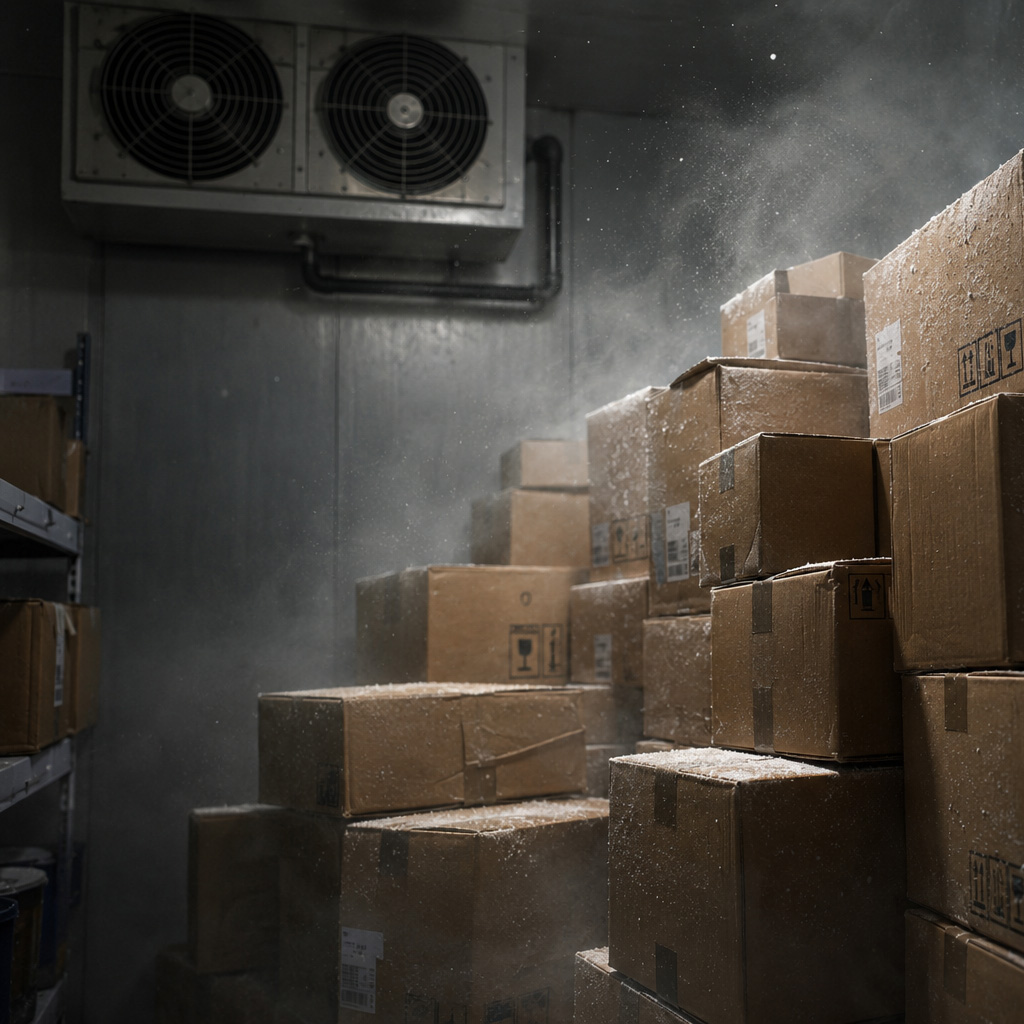
1) Cardboard Dust and Packaging Debris
Cardboard boxes shed dust and debris constantly. Over time, this buildup becomes more than just messy—it can restrict airflow and create a less sanitary environment.
Better approach:
If possible, remove cardboard packaging outside the walk-in and store product in clean bins or on shelving. Even reducing cardboard inside the box can make cleaning easier.
2) Spills That Become Hidden Moisture Problems
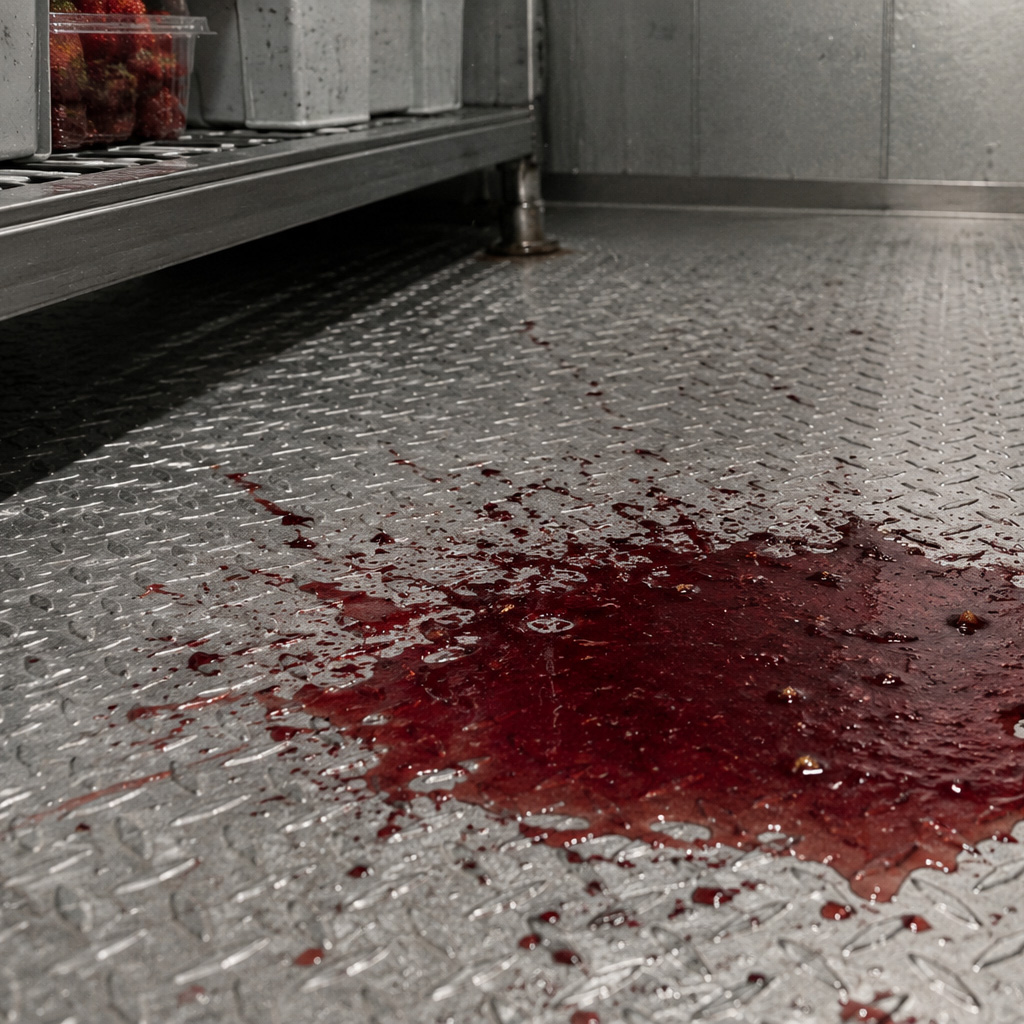
Small spills often get ignored because they’re not “urgent.” But in cold environments, moisture can spread quickly and create bigger issues.
In coolers, spills can cause:
- pooling water
- slippery floors
- mold or odor issues in corners
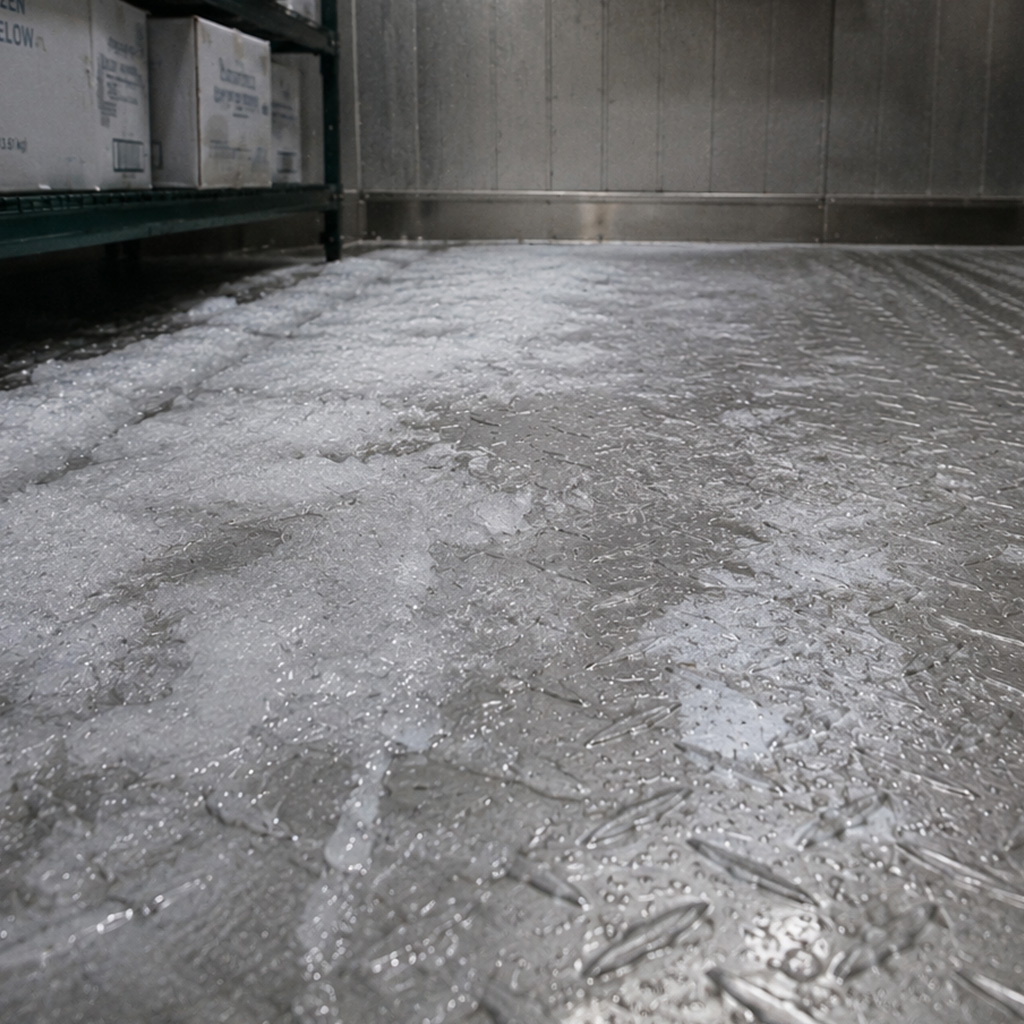
In freezers, spills can become:
- ice buildup that expands
- uneven floor surfaces
- door threshold ice hazards
Cleaning spills immediately protects safety and prevents long-term buildup.
3) Floor Ice or Condensation Near the Entrance
Moisture at the entrance is one of the most important early warning signs in any walk-in.
In coolers, it may show up as sweating or water near the threshold.
In freezers, it often becomes frost or ice at the door opening.
This usually indicates:
- door-open traffic bringing in humidity
- gasket or seal issues
- sweep/threshold wear
- workflow patterns that keep the door open too long
Cleaning the entrance area regularly helps you spot patterns early—before they become bigger repairs.

4) Clutter That Blocks Airflow
A walk-in can look “full” and still be organized. The problem is when clutter prevents airflow and access.
A cluttered walk-in leads to:
- blocked fan discharge
- uneven temperatures
- warm zones
- longer compressor runtime
If product blocks airflow, the refrigeration system has to work harder to stabilize temperatures.
A Cleaner Walk-In = Faster Picking and Better Workflow
There’s also a major efficiency advantage to cleanliness: speed.
When a walk-in is clean and organized, employees:
- find product faster
- spend less time with the door open
- avoid rearranging during stocking
- rotate inventory more accurately
That reduces door-open time, which reduces heat gain, which improves recovery time.
Cleanliness supports performance in more ways than most people realize.

A Simple Walk-In Cleaning Routine That Works
H
A full deep clean doesn’t have to happen every day, but consistent small maintenance prevents major mess.
Daily (or each shift)
✅ pick up debris and broken boxes
✅ wipe up spills immediately
✅ ensure door closes fully and seals properly
✅ keep entrance area clear
Weekly
✅ wipe down shelving and handles
✅ clean floor edges and corners
✅ check for recurring moisture spots
✅ reorganize zones as needed
Monthly
✅ remove excess clutter and old product
✅ inspect gasket condition and door hardware
✅ look for signs of condensation, frost, or ice
✅ ensure airflow clearance near evaporator areas
Even 10 minutes a week can prevent the buildup that causes the biggest problems.
The Hidden Benefit: Clean Walk-Ins Last Longer
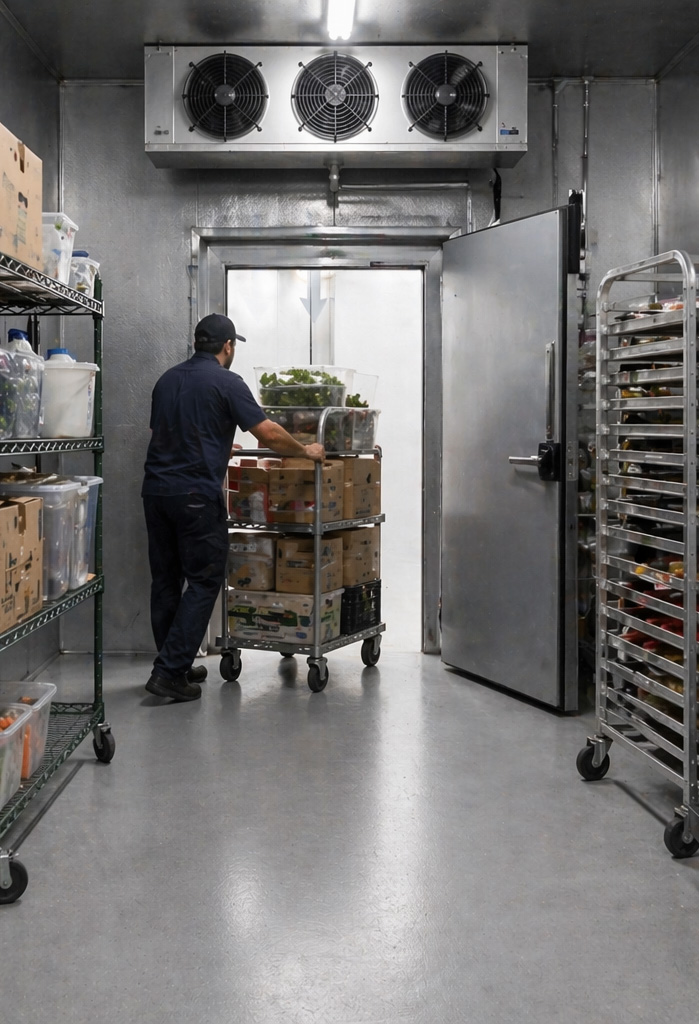
Walk-ins are long-term investments. Keeping them clean helps protect:
- panel surfaces
- door seals
- floor integrity
- hardware performance
When moisture sits too long or ice is allowed to build up, it can create wear that leads to expensive repairs later.
Clean walk-ins don’t just look better—they typically last longer and operate more efficiently.
Final Takeaway: Cleanliness Is a Performance Tool
A clean walk-in means:
✅ better airflow
✅ more consistent temperature performance
✅ safer working conditions
✅ easier stocking and picking
✅ fewer moisture problems
✅ less strain on equipment
If you want one of the simplest ways to improve walk-in reliability, start with cleanliness and organization. Small habits now prevent bigger problems later.