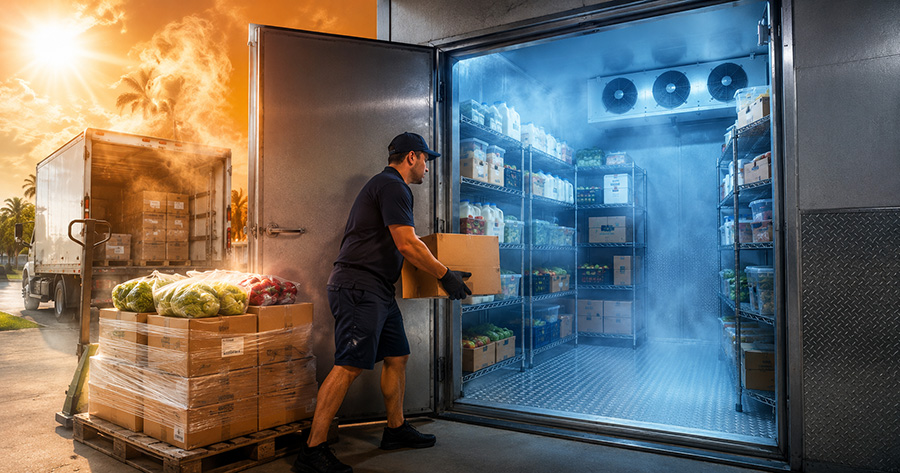
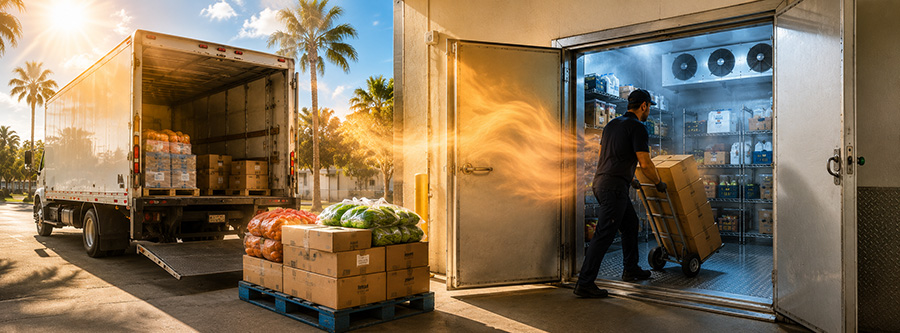
Summer deliveries can be brutal on walk-in coolers and freezers.
The combination of hot outdoor temperatures, warm product arriving, and long door-open time during stocking creates a perfect storm for temperature spikes, slow recovery, and increased system strain.
If you’ve ever noticed your walk-in struggling to “catch up” after a busy delivery day, you’re not alone—and in many cases, the solution is less about equipment and more about process.
In this article, we’ll cover why summer loading is harder on walk-ins, what mistakes cause the biggest temperature swings, and the best real-world practices to protect product and performance during peak heat.
Why Summer Loading Hits Walk-Ins So Hard
During cooler months, a delivery might bring in product that’s already relatively close to storage temperature. Door openings may not introduce much heat or humidity.
Summer changes everything.
In summer, walk-ins face three major extra loads:
- Hot ambient air entering every time the door opens
- Higher humidity entering with that air
- Warmer product arriving and needing more cooling
Even if everything is working properly, these factors increase run time and recovery time.
The Biggest Summer Delivery Mistakes (That Cause Temperature Spikes)
1) Leaving the door open during stocking
This is the #1 reason walk-ins struggle after deliveries.
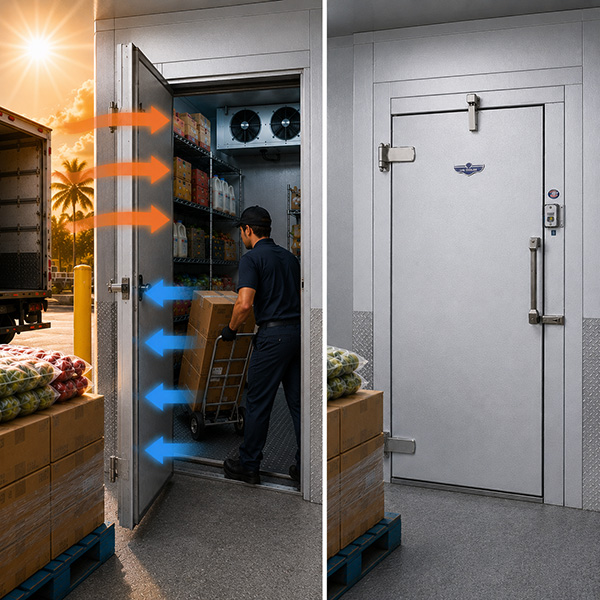
When the door is open for long periods, warm air pours in and cold air pours out. The system has to cool both the product and all of the incoming warm air.
What it causes:
- slower recovery
- longer compressor runtime
- condensation near the entrance (coolers)
- frost and ice buildup (freezers)
Best practice: Close the door between loads whenever possible.
2) Bringing hot product directly inside
In summer, deliveries often sit in heat during transport or unloading. If product arrives warm, the walk-in becomes the cool-down zone.
That’s a huge heat load.
What it causes:
- temperature rises that last hours
- slow product cooling
- system running constantly
Best practice: If possible, stage product briefly in a shaded, cooler area before loading into the walk-in, especially when unloading takes time.
3) Blocking airflow during stocking
When stocking gets rushed, it’s common to stack cases wherever there’s space. That often means blocking airflow near the evaporator or packing product too tightly.
What it causes:
- uneven temperatures
- warm zones
- longer run times
- slow recovery even after the door is closed
Best practice: Keep clearance near evaporator fan discharge and return airflow paths.
4) Overpacking without leaving air gaps
Walk-ins cool best when cold air can circulate. Tight packing reduces circulation and traps warm spots.
Best practice: Maintain space between product stacks and avoid stacking tightly against walls.
Best Practices for Summer Walk-In Deliveries
The goal during summer is simple:
Reduce heat gain and humidity intrusion while protecting airflow.
Here are the best strategies to do exactly that.
1) Use a “Stage → Load → Close” workflow
Instead of carrying product directly into the walk-in with the door open the whole time, try staging deliveries outside the walk-in first.
A simple workflow:
- Stage product near the entrance (in shade if possible)
- Load quickly in smaller batches
- Close the door between trips
This reduces the time the door remains open continuously, which is one of the most effective ways to control summer heat gain.
2) Keep a dedicated “delivery zone” inside the walk-in
Many operations lose time searching for space while the door is open.
A dedicated delivery zone solves that.
A delivery zone helps you:
- place product immediately without rearranging
- keep the entrance clear
- stock faster with less door-open time
Then, once the door is shut and the walk-in begins recovering, staff can reorganize inventory more slowly without holding the door open.
3) Protect airflow near the evaporator
The evaporator is the heart of your temperature circulation. When airflow is blocked, recovery slows dramatically.
Keep these areas clear:
- directly in front of evaporator fans
- below the evaporator (don’t stack high underneath)
- return airflow pathways
If cold air can’t circulate, product won’t cool evenly.
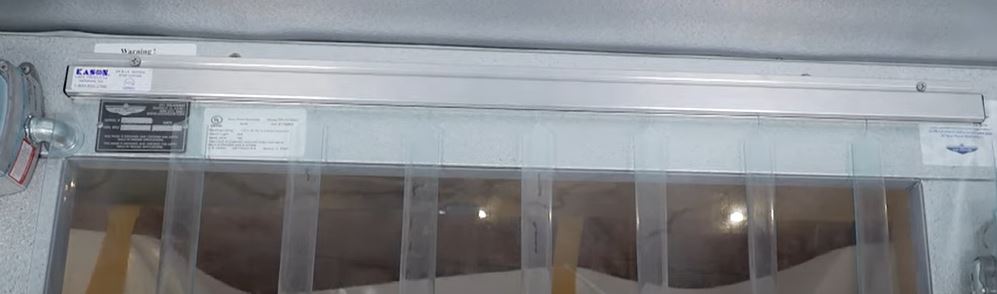
4) Consider strip curtains for high-traffic deliveries
Strip curtains are one of the most cost-effective summer upgrades.
They help reduce:
- air exchange
- humidity intrusion
- temperature spikes during repeated entry
If your walk-in is accessed constantly during deliveries and busy shifts, strip curtains can pay for themselves quickly through improved stability and efficiency.
5) Improve organization to reduce search time
Summer stocking problems often come from one thing: people standing inside the doorway trying to figure out where things go.
A few organization upgrades that help:
- clear labeling for zones
- shelving layouts by product type
- high-turn items near the front
- overflow space reserved for deliveries
The faster your team can stock, the less heat enters the box.
When to Be Concerned (and When It’s Normal)
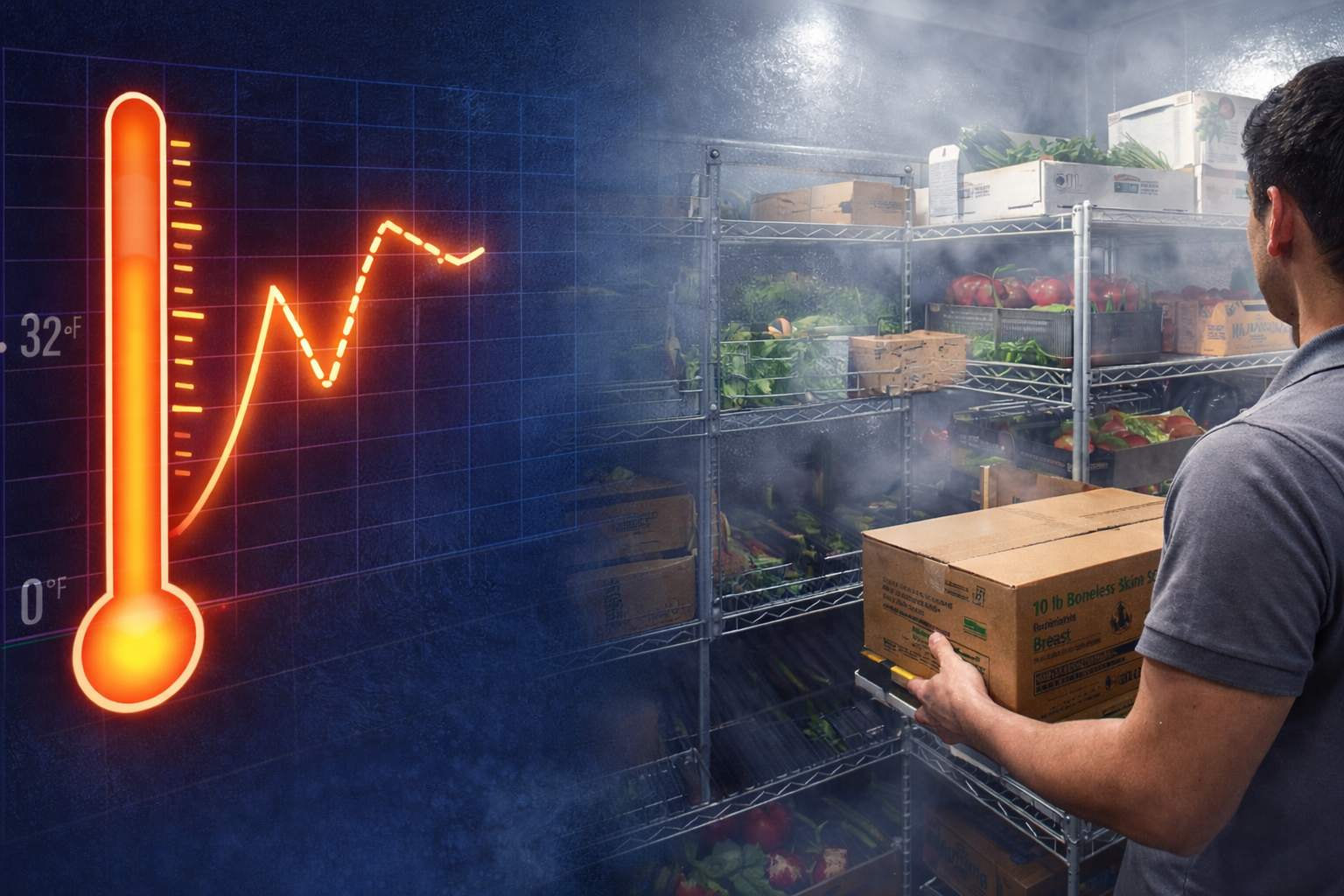
A small temperature rise after a large delivery can be normal—especially in summer.
But you should investigate if:
- the walk-in never returns to set temperature
- product cool-down times are unusually slow
- heavy condensation persists around the entrance
- frosting builds up quickly at the door (freezers)
- the unit runs nonstop even overnight after a delivery
These can indicate door sealing issues, airflow problems, or system needs.
Summer Delivery FAQ
Q1: Is it normal for a walk-in cooler to run longer after summer deliveries?
Answer: Yes. Warm outdoor temperatures, humidity, and warmer product loads increase the amount of heat the refrigeration system must remove, resulting in longer run times and recovery periods.
Q2: Why does my walk-in temperature rise after deliveries?
Answer: Temperature rises are often caused by warm air entering through open doors and warm product being loaded into the cooler. Both add heat that the system must remove before temperatures return to normal.
Q3: How can I reduce walk-in temperature spikes during summer?
Answer: Reduce door-open time, stage product before loading, maintain proper airflow around evaporators, organize inventory for faster stocking, and consider installing strip curtains.
Q4: Do strip curtains help during deliveries?
Answer: Yes. Strip curtains reduce the amount of warm air and humidity entering the walk-in during frequent entry and exit, helping improve temperature stability and recovery times.
Q5: Can blocking airflow make a walk-in run longer?
Answer: Absolutely. Product stacked in front of evaporator fans or packed too tightly can restrict airflow, creating uneven temperatures and increasing refrigeration run time.
Q6: When should I be concerned about extended run times?
Answer: Investigate if temperatures never return to setpoint, product cooling is unusually slow, frost or condensation worsens, or the system runs continuously long after deliveries have ended.
Final Takeaway: Summer Deliveries Demand a Smarter Process
In peak heat, walk-in performance is as much about how you load as what equipment you have.
If you want better summer stability, focus on:
✅ shorter door-open time
✅ staged loading
✅ airflow clearance
✅ organized zones for fast stocking
✅ strip curtains for high-traffic use
Small process changes can make a noticeable difference in recovery time, energy cost, and temperature consistency all summer long.