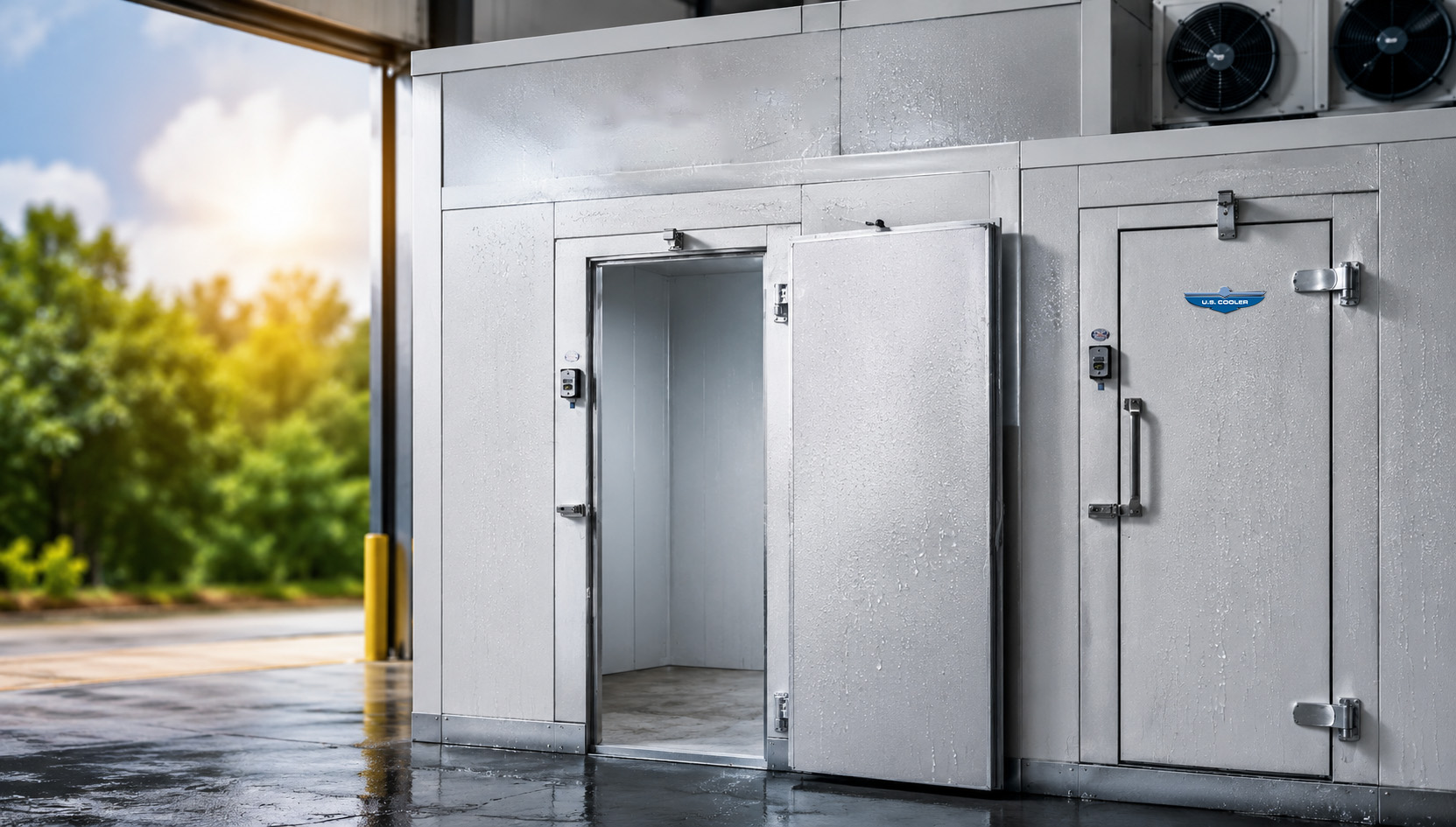
Summer is tough on walk-in coolers and freezers—not because the equipment suddenly stops working, but because the environment around your walk-in changes.
As outdoor temperatures rise, humidity rises too, and humidity is one of the biggest drivers of walk-in issues like:
- sweating/condensation around the door
- slippery floors near the entrance
- frost buildup inside freezers
- ice forming at the threshold
- longer run times and slower recovery
The good news is that most summer humidity problems can be reduced (or prevented entirely) with a few practical steps.
In this article, we’ll explain why humidity causes these issues and what you can do to keep your walk-in efficient and safe all summer long.
Why Humidity Causes Walk-In Problems
Humidity is moisture in the air. When warm, humid air enters a cold walk-in, that moisture has to go somewhere.
In a cooler:
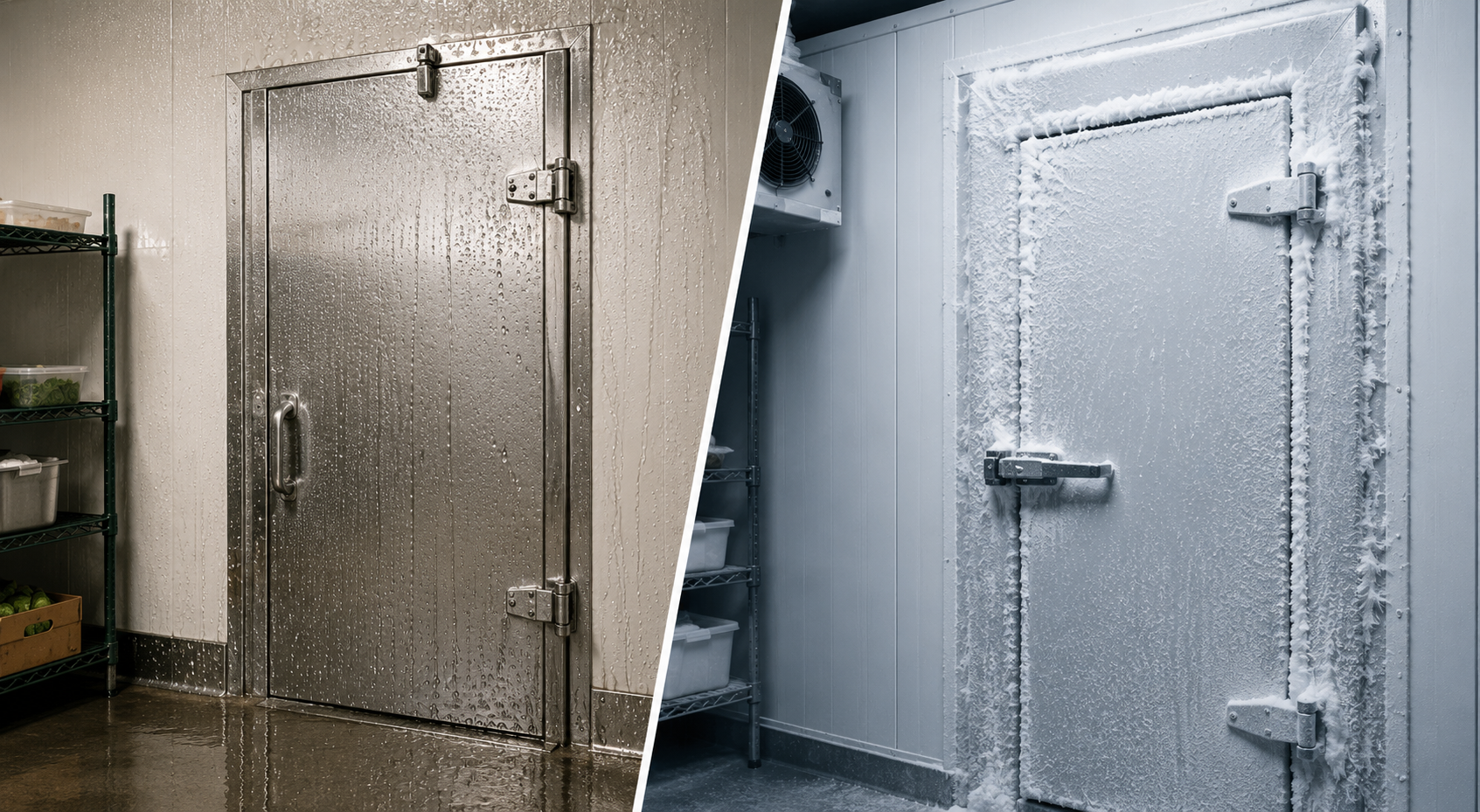
Humidity often becomes condensation—water droplets forming on:
- door frames
- gaskets
- walls near the entrance
- floors near the threshold
That’s why people call it “door sweating.”
In a freezer:
Humidity becomes frost or ice, because moisture freezes quickly at freezer temperatures.
Either way, it creates a cycle that makes your system work harder:
- warm air enters
- moisture enters
- the system has to remove heat + moisture
- run times increase
- the walk-in struggles to recover after traffic
The Most Common Summer Walk-In Symptoms (and What They Mean)
1) Condensation around the door frame
This is a classic sign of warm, humid air hitting cold surfaces at the entrance. It often shows up first at:
- the frame edges
- the corners of the gasket
- the lower portion of the door
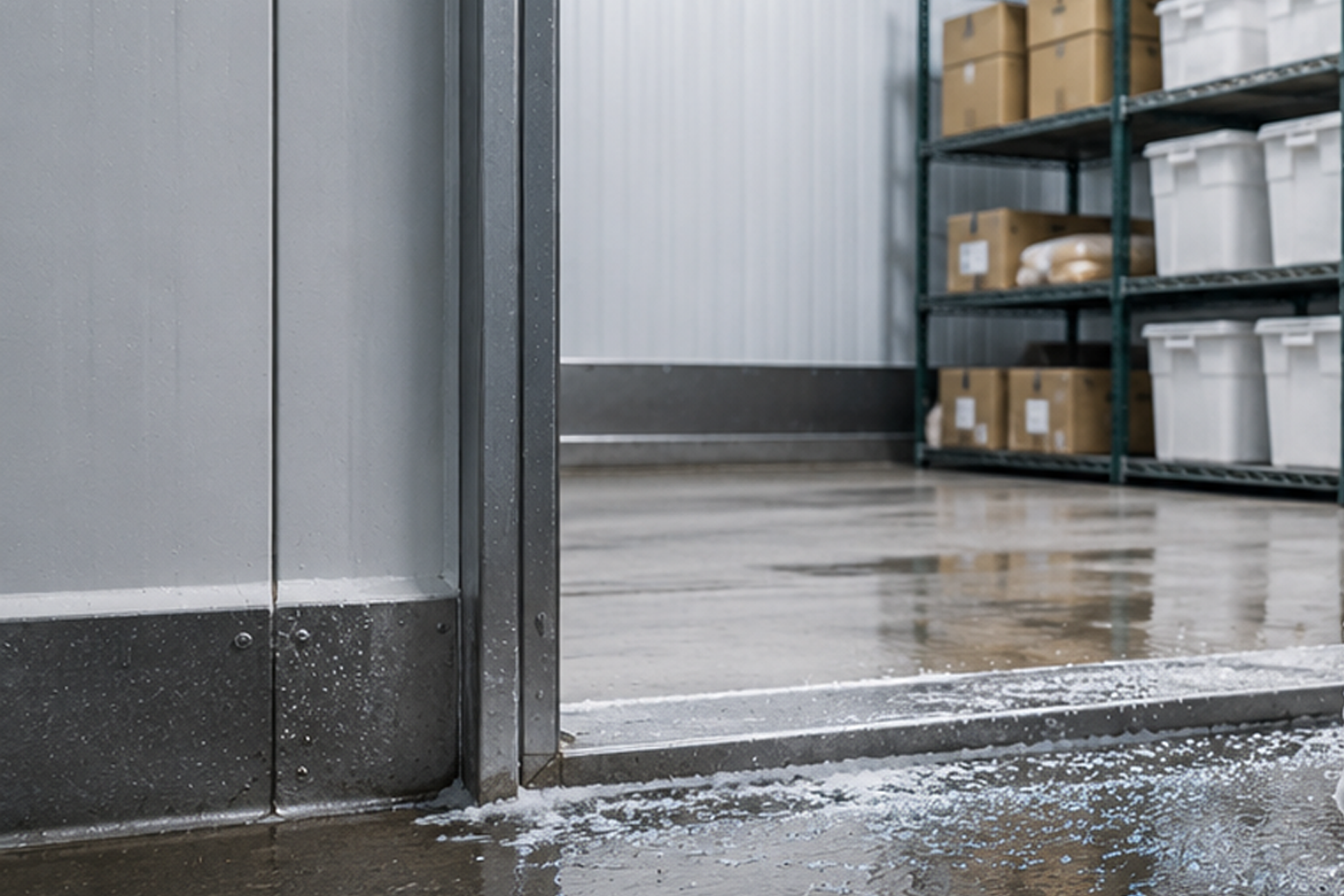
2) Wet, slippery floors near the entrance
If moisture appears near the doorway, it typically points to:
- heavy traffic
- door-open time
- gasket not sealing
- worn sweep/threshold at floor level
3) Frost buildup inside a freezer near the entry
When moisture enters a freezer repeatedly, it freezes and builds up as:
- frost around the frame
- ice at the threshold
- “snowy” buildup in corners
- ice chunks near the entry floor
This isn’t just annoying—it’s a sign of ongoing humidity intrusion.
The Biggest Causes of Summer Humidity Intrusion
Door-open time during busy hours
The more the door stays open, the more warm humid air floods in.
This is common during:
- deliveries and stocking
- peak lunch/dinner rushes
- shift changes
- frequent beverage access
Even a well-performing system will struggle if the door is open constantly.

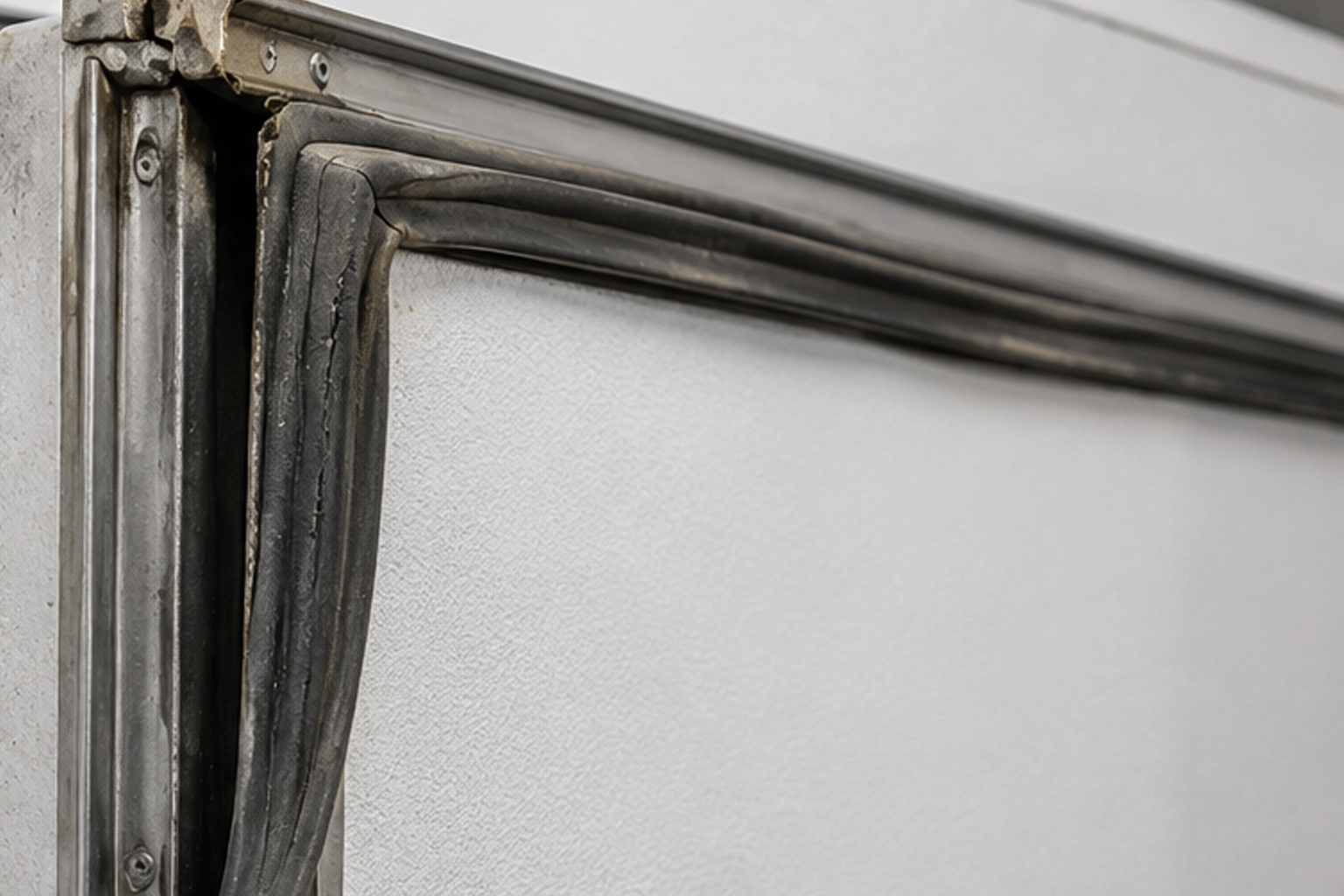
Worn or poorly sealing door gaskets
A gasket doesn’t need to be torn to leak. Many gaskets fail because they become:
- stiff and flattened
- uneven at corners
- loose from the mounting track
When that happens, warm air can leak in continuously—even when the door is “closed.”
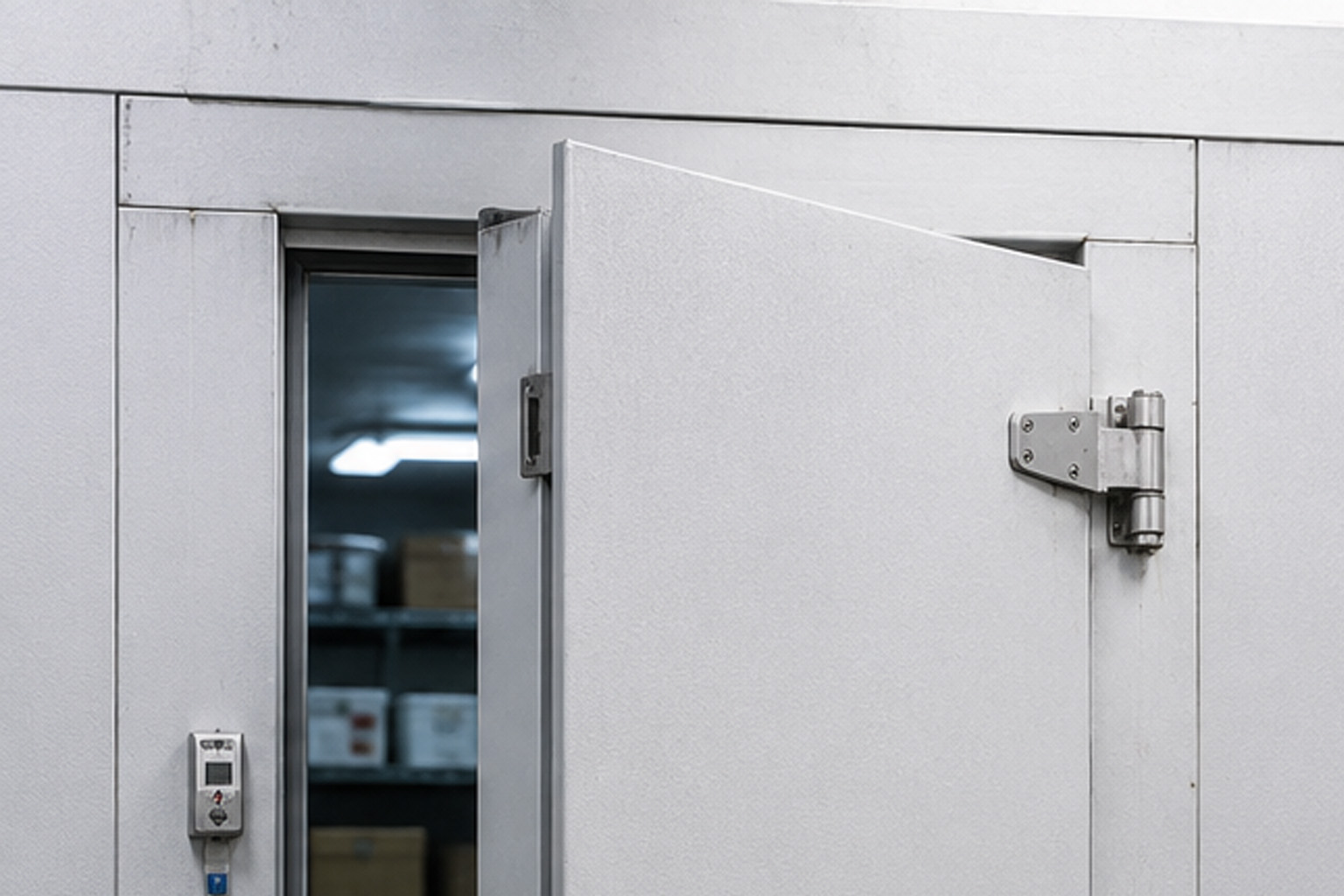
Misaligned door hardware
Sometimes the gasket is fine, but the door isn’t pulling tight against it because of:
- hinge wear and door sag
- latch/strike misalignment
- a closer that doesn’t fully shut the door
A door can close and latch—yet still leak air.
Missing or worn sweeps and thresholds
Warm air loves to enter at floor level.
If there’s a small gap at the bottom of the door, humidity intrusion increases dramatically—and you’ll often see it as moisture or ice right at the entrance.
Summer Walk-In Prevention: What Works in the Real World
Here are the best ways to cut humidity intrusion without changing your system.
1) Reduce door-open time during stocking
If possible, avoid leaving the door propped open.
A simple habit change helps:
✅ close the door between trips
✅ stage product nearby before loading
✅ keep walk-in zones organized so staff don’t “search” with the door open
2) Use strip curtains for high-traffic walk-ins
Strip curtains help prevent full air exchange when the door opens.
They’re one of the most affordable and effective upgrades for:
- restaurants
- grocery backrooms
- convenience stores
- schools and cafeterias
- high-use beverage coolers
They help hold temperature and reduce humidity entry even when traffic is constant.
3) Inspect your gasket early (before the hottest weeks)
If you can prevent a seal problem before summer traffic peaks, you’ll avoid:
- door sweating
- icing issues
- energy loss
- service calls at the worst time
If the gasket is cracked, stiff, or gapped, replacing it early often pays for itself quickly.
4) Make sure the door closes completely, every time
A door that “almost shuts” is a huge humidity problem in summer.
Watch for:
- door drifting open slightly
- door needing a push to latch
- inconsistent closing behavior
These are early signs that hinges, latches, or closers may need adjustment or replacement.
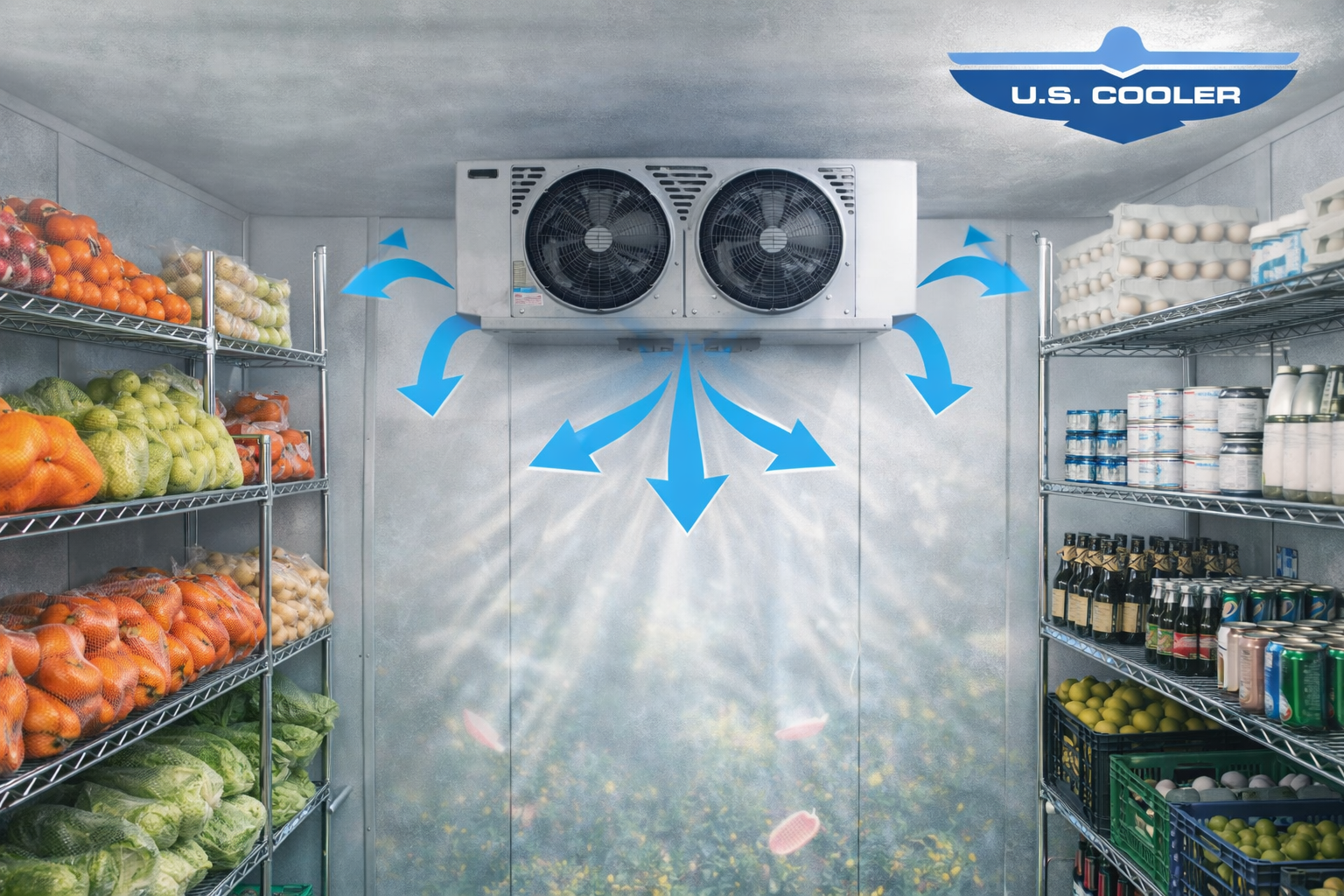
5) Keep airflow pathways clear
Overpacking the walk-in can make humidity issues worse by slowing the system’s ability to circulate cold air and recover quickly.
Keep clearance around:
- evaporator airflow
- walls and corners
- shelving gaps
Better airflow helps stabilize temperature and manage moisture more effectively.
Final Takeaway: Humidity Is a Summer Walk-In Reality—But You Can Control It
Summer humidity problems usually come from one thing: warm moist air entering the walk-in too often or too easily.
If you want to keep your walk-in efficient and safe this season, focus on:
✅ tight door seals
✅ shorter door-open time
✅ strip curtains for busy traffic
✅ healthy door hardware alignment
✅ clean airflow clearance
These simple steps reduce condensation, prevent icing, and keep your system running the way it should—even in peak summer heat.