

When customers purchase a new walk-in cooler or freezer, most of the attention goes to the equipment and the footprint.
But in the real world, the decision that impacts daily operations the most is often this:
Did you size the walk-in correctly for how you actually use it?
A walk-in that’s too small becomes a daily struggle. A walk-in that’s too large can be an unnecessary expense and inefficient use of space.
In this article, we’ll walk through what to consider before you finalize walk-in size—and how to make sure your investment supports your operation long-term.
Why Walk-In Sizing Is More Than “How Much Fits”
Walk-ins aren’t just storage boxes. They’re part of your daily workflow.
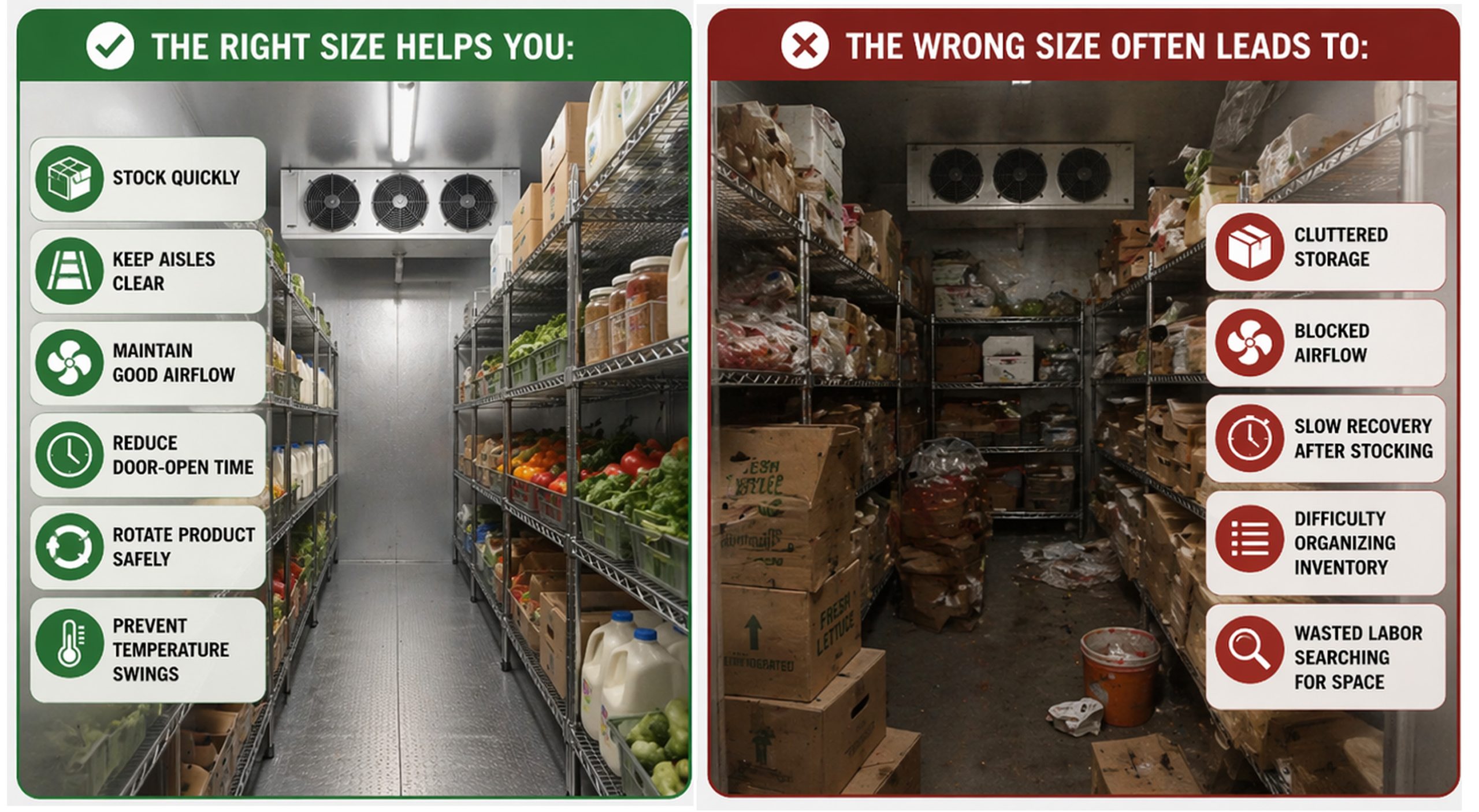
The right size helps you:
- stock quickly
- keep aisles clear
- maintain good airflow
- reduce door-open time
- rotate product safely
- prevent temperature swings
The wrong size often leads to:
- cluttered storage
- blocked airflow
- slow recovery after stocking
- difficulty organizing inventory
- wasted labor searching for space
Step 1: Think in Terms of “Peak Inventory,” Not Average Inventory
Most businesses have a normal flow—but they also have peak moments:
- weekly deliveries
- seasonal rush
- holidays
- special events
- new menu launches
- bulk purchasing cycles
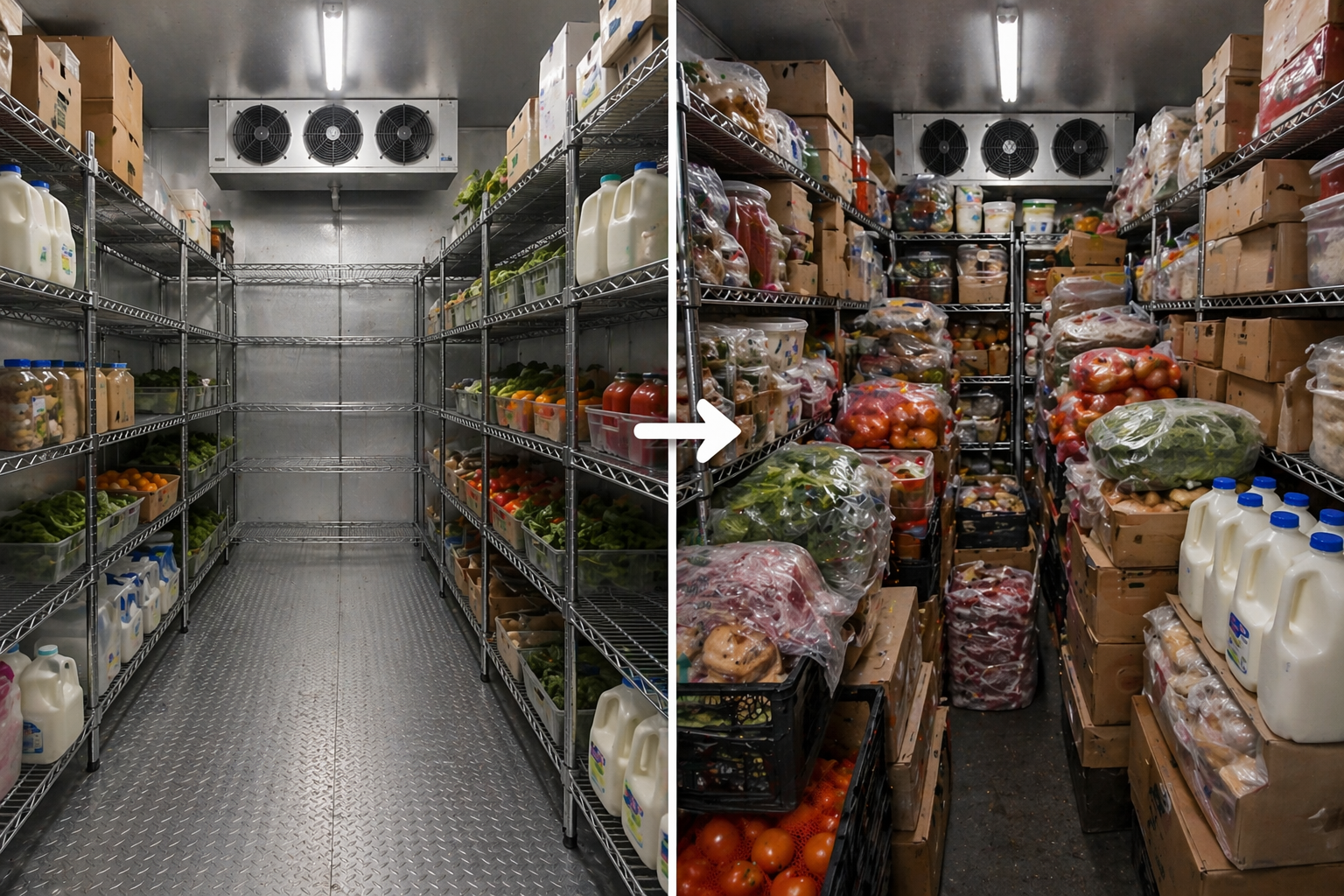
Sizing for “average inventory” often means your walk-in becomes overloaded during peak times—and that’s when performance issues show up.
A better approach is to ask:
What does inventory look like on the biggest delivery day of the month?
That’s the real size requirement.
Step 2: Plan for Airflow and Aisles (Not Just Stacking Space)
It’s tempting to maximize wall space and stack product tightly.
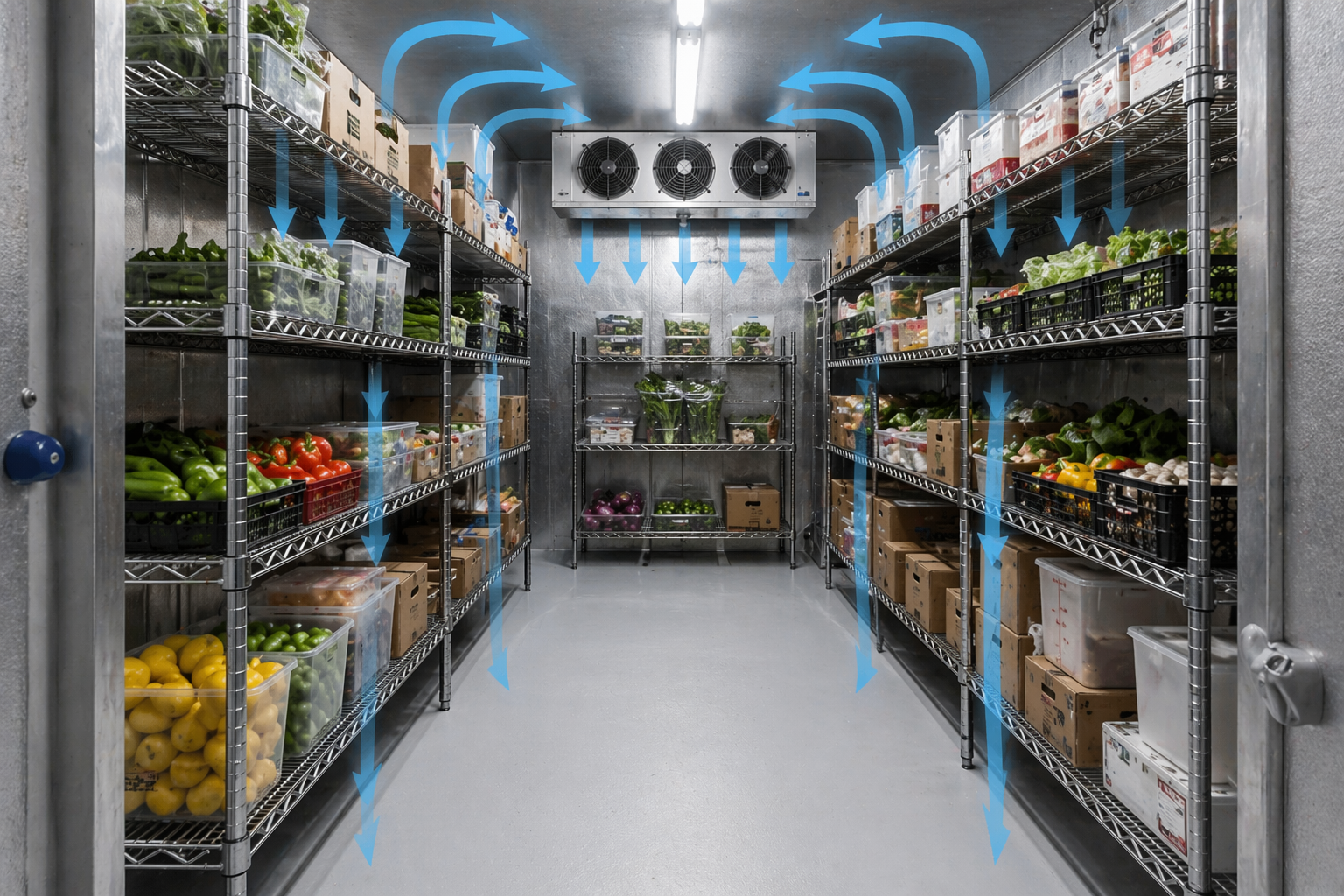
But walk-in performance depends on airflow.
If you size a walk-in so tightly that you can only store product by stacking it everywhere, you’ll run into:
- warm zones
- uneven temperatures
- longer equipment runtime
- more frequent frosting/condensation issues
A properly sized walk-in should allow:
✅ clear aisles
✅ room to access product safely
✅ shelving space for organization
✅ airflow clearance at walls and ceiling
Step 3: Consider How You Move Product In and Out
Your storage method matters.
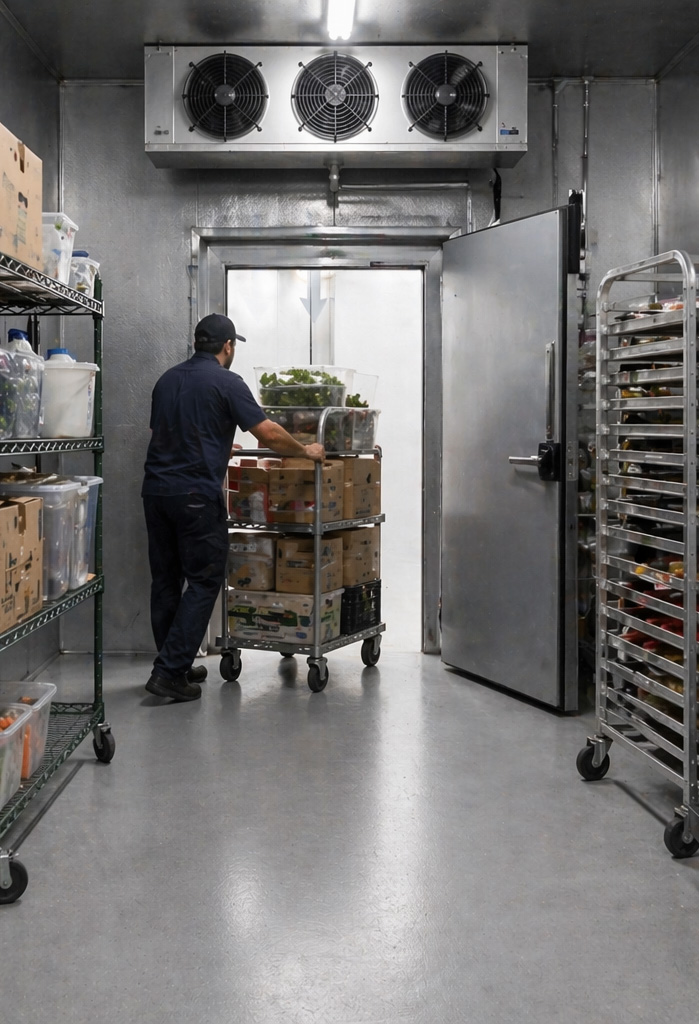
A walk-in designed for small case storage may feel cramped if you bring in:
- pallets
- carts
- racks
- kegs
- rolling ingredient bins
If product movement is awkward, the door stays open longer, stocking takes longer, and organization breaks down fast.
Before sizing, ask:
- Do you use carts or pallets?
- How many people stock at once?
- Do you need turning space inside?
- Does your operation require frequent access?
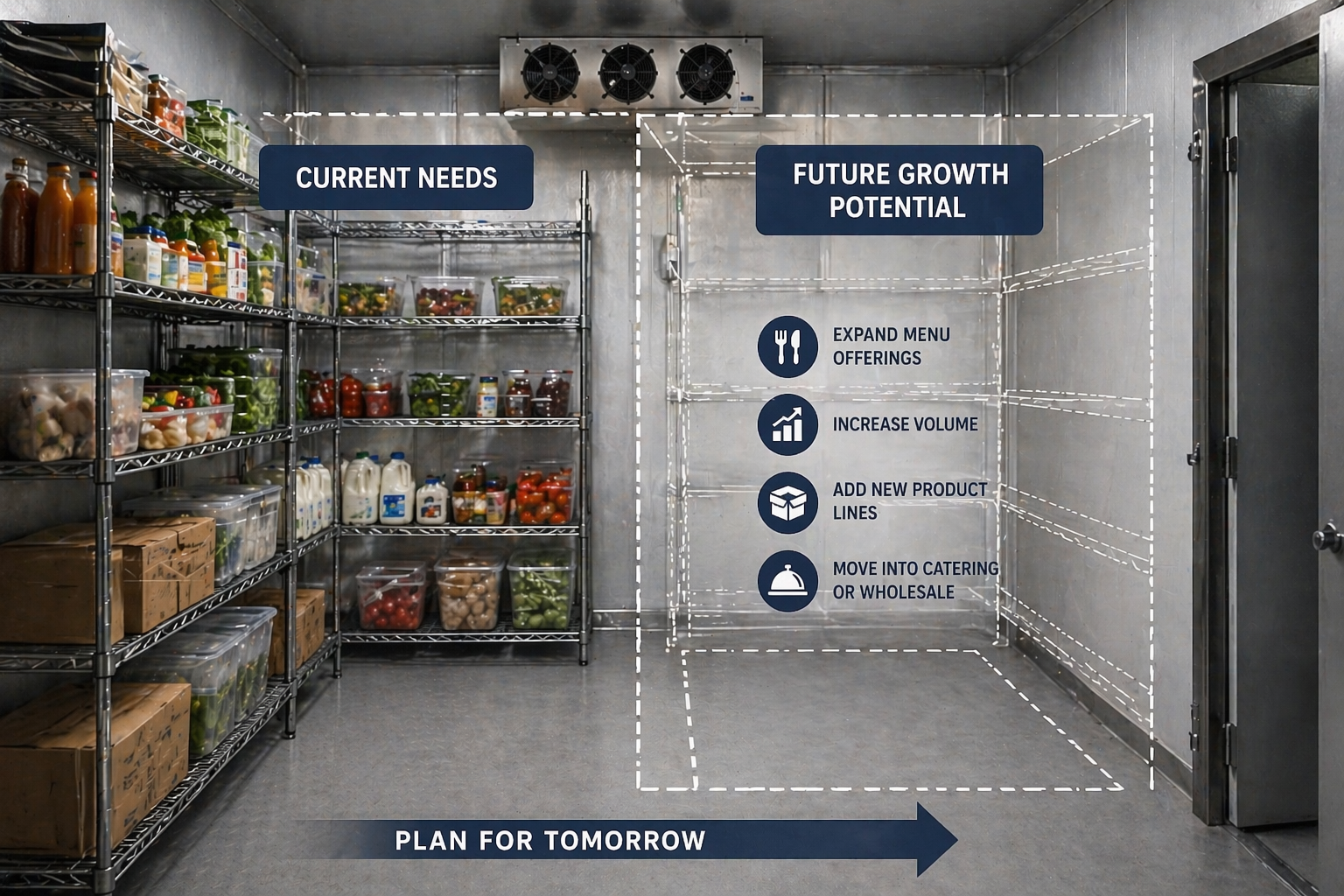
Step 4: Think About Growth (Even If You’re Not Expanding Yet)
A walk-in is usually a long-term investment.
Even modest growth over a few years can overwhelm a perfectly sized walk-in if there’s no buffer built in.
If you plan to:
- expand menu offerings
- increase volume
- add new product lines
- move into catering or wholesale
…then your walk-in size should reflect those goals.
Step 5: Cooler vs. Freezer vs. Combo Also Affects Sizing
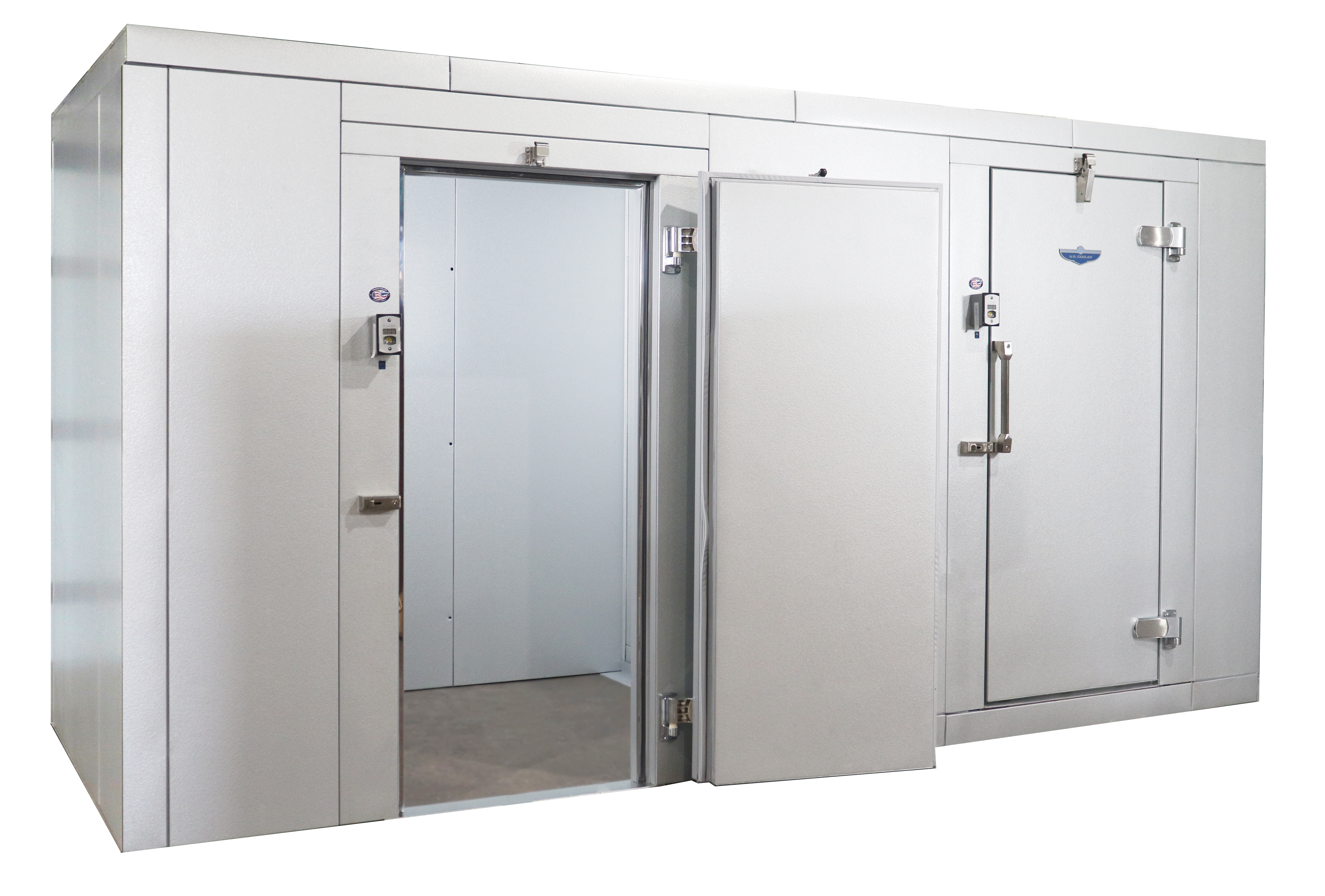
Coolers and freezers behave differently.
Freezers are more sensitive to:
- door-open time
- humidity intrusion
- icing at the entrance
- airflow blockages
So if you’re sizing a freezer, leaving extra room for airflow and organization becomes even more important.
Combo units also need thoughtful sizing because each section has to support its own inventory needs—without becoming cramped.
The Common
“Too Small”
Warning Signs
If you’re designing a walk-in and any of these sound familiar, you may need more space:
- “We’ll just stack it higher.”
- “We can store extra in the corner.”
- “We’ll reorganize later.”
- “We don’t really need an aisle.”
- “We can always add shelves.”
Those plans usually lead to airflow problems and constant clutter.

Final Takeaway: The Right Size Makes Everything Easier
The best walk-ins are the ones that support your operation smoothly every day.
Sizing correctly helps you:
✅ keep inventory organized
✅ reduce stocking time and door-open exposure
✅ maintain stable temperatures
✅ improve efficiency and performance
✅ avoid overloading and airflow restrictions
If you’re purchasing a new walk-in, sizing isn’t just a detail—it’s the foundation of long-term performance.