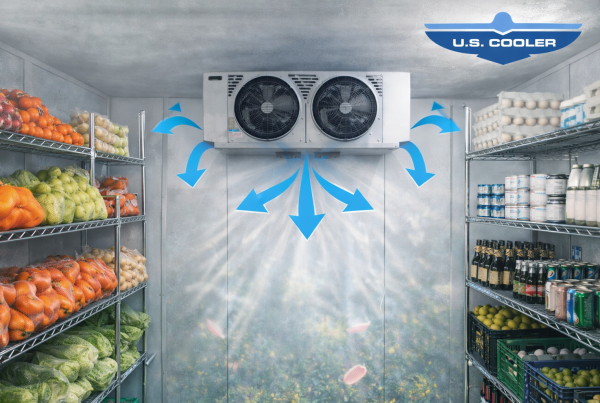

Walk-in coolers and freezers are built to hold temperature reliably—but only when air can move the way it’s designed to.
One of the most common performance problems we see isn’t the refrigeration system… it’s airflow being blocked inside the walk-in. And when airflow is restricted, your system has to work harder, run longer, and fight uneven temperatures every day.
Why airflow matters
Your evaporator coil and fans are responsible for circulating cold air throughout the space. When products are stacked too tightly or placed in the wrong spots, you can create “dead zones” where cold air can’t reach—leading to warm areas, freezing in the wrong places, and inconsistent performance.
Common airflow-blocking mistakes
Here are the biggest culprits:
1) Stacking product too close to the evaporator
When product blocks the fans or coil, airflow drops and the system struggles to recover—especially after busy periods.
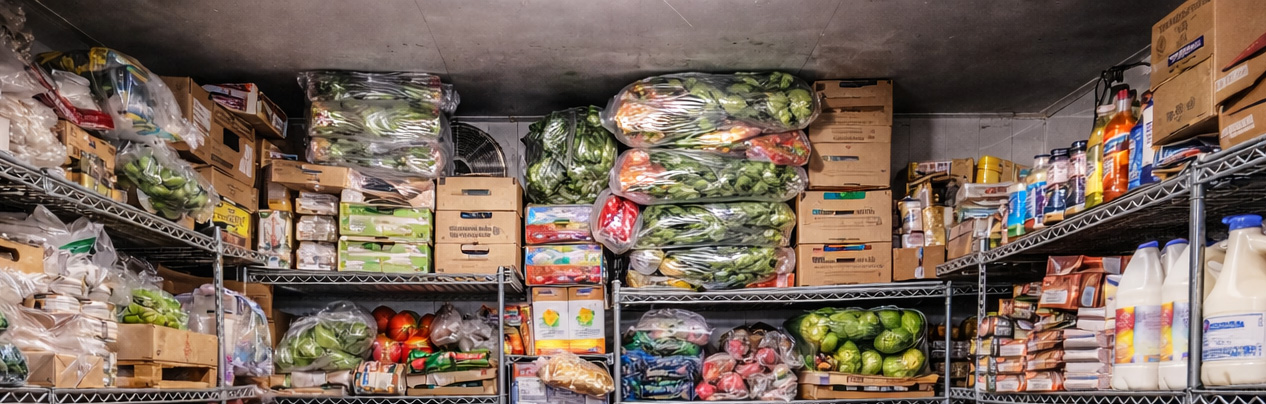
2) Filling the cooler wall-to-wall
Walk-ins need breathing room. Even small gaps between product stacks help air circulate and maintain consistent temperature throughout.
3) Blocking return air paths
Cold air needs a return path to circulate properly. If product stacks prevent air from flowing back toward the coil, you’ll see uneven temps and longer run times.
4) Ignoring pallet placement
Pallets stacked tight to walls and corners reduce airflow and can create warmer pockets—especially in high-volume storage.
Signs your airflow is being restricted
If you’re experiencing any of the following, airflow may be part of the problem:
- warmer product on one side of the walk-in
- ice or frost forming in unusual areas
- longer recovery times after stocking
- inconsistent temperatures even with a functioning system
- higher energy use than expected
Best practices for balanced airflow
To keep a walk-in operating efficiently:
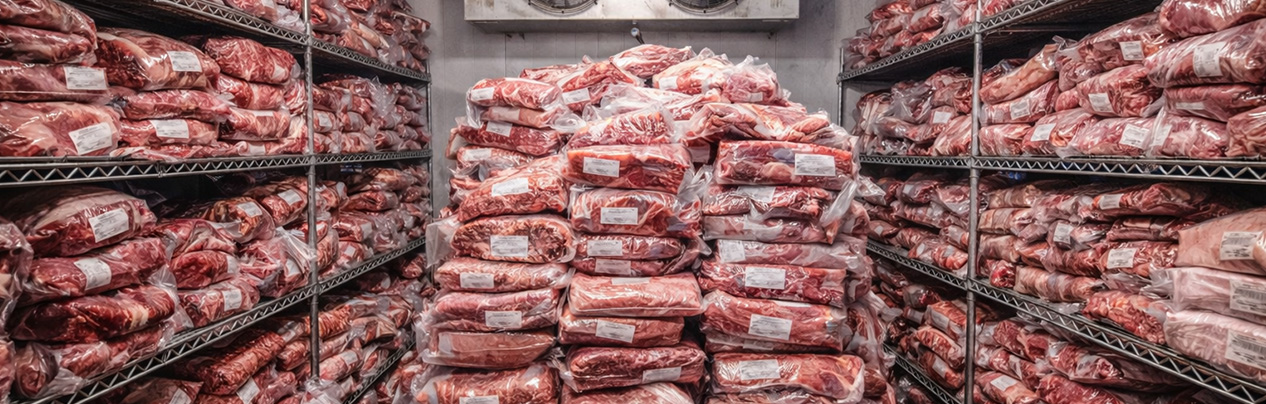
✅ Maintain clearance around the evaporator unit
✅ Leave space between product and walls
✅ Don’t stack all the way to the ceiling unless designed for it
✅ Avoid blocking fan discharge areas
✅ Use shelving or organized racking when possible
The bottom line
A walk-in cooler can only perform as well as the airflow inside it. Proper loading doesn’t just protect your product—it reduces runtime, helps prevent temperature swings, and can extend the life of your equipment.
If you want the simplest way to improve walk-in performance, start with the airflow.