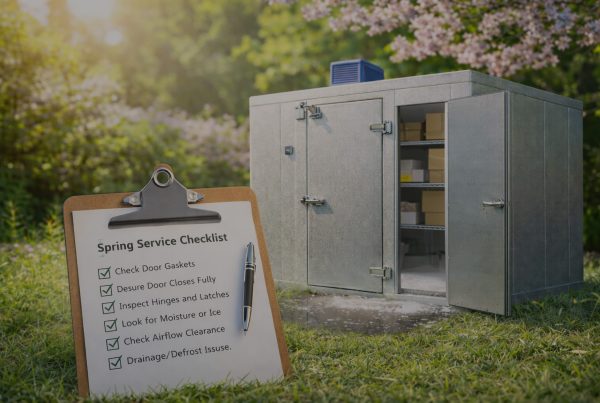

Most walk-in issues don’t happen overnight—they build up slowly. A small gap becomes a leak. A light frost becomes ice. A door that “almost seals” becomes a temperature problem.
The good news? A quick weekly walk-in check can help you catch problems early—before they become expensive repairs or lost product.
Here’s a simple inspection that takes about 5 minutes.
1) Check the door seal
Start at the gasket. Look for:
- cracks or tears
- loose corners
- stiff or flattened sections
- moisture or frost around the frame
A bad seal lets warm air and humidity into the box, increasing energy use and causing icing problems.

2) Look at the floor near the entrance
Ice or moisture at the entry can indicate:
- door not sealing tightly
- sweep/threshold wear
- excessive door-open time
- traffic-related humidity entering the walk-in
Small changes here often show up before major issues do.

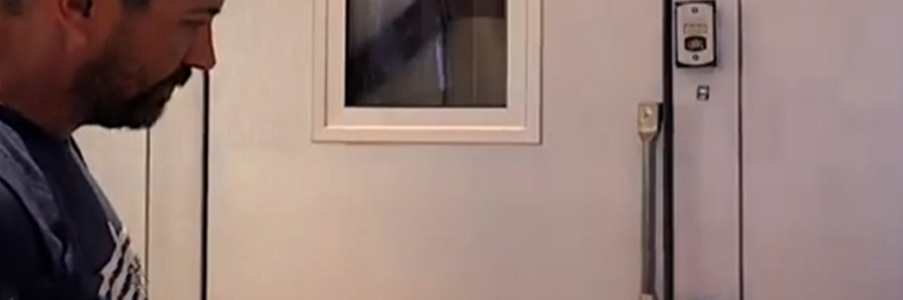
3) Confirm the door closes cleanly
Open and close the door a few times. Make sure it:
- shuts fully every time
- latches without forcing
- doesn’t bounce back open
- doesn’t drag or rub
If it’s hard to close, the hinges or closer may be wearing out—or the latch may be out of alignment.
4) Listen to the system (seriously)
Unusual noises can be early indicators. If you hear changes in fan noise, cycling patterns, or loud operation compared to normal, it’s worth noting.

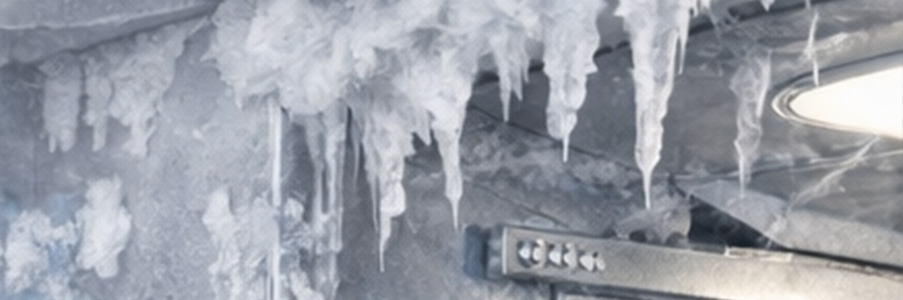
5) Look for frost where it shouldn’t be
A little frost isn’t always a crisis—but frost in the wrong places is information.
Look for:
- frost around door openings
- ice buildup under evaporators
- heavy frost along ceiling joints
These can point to humidity intrusion, airflow restriction, or drainage issues.
The bottom line
A quick inspection won’t replace professional service—but it will help you catch small problems early, protect your product, and reduce downtime.