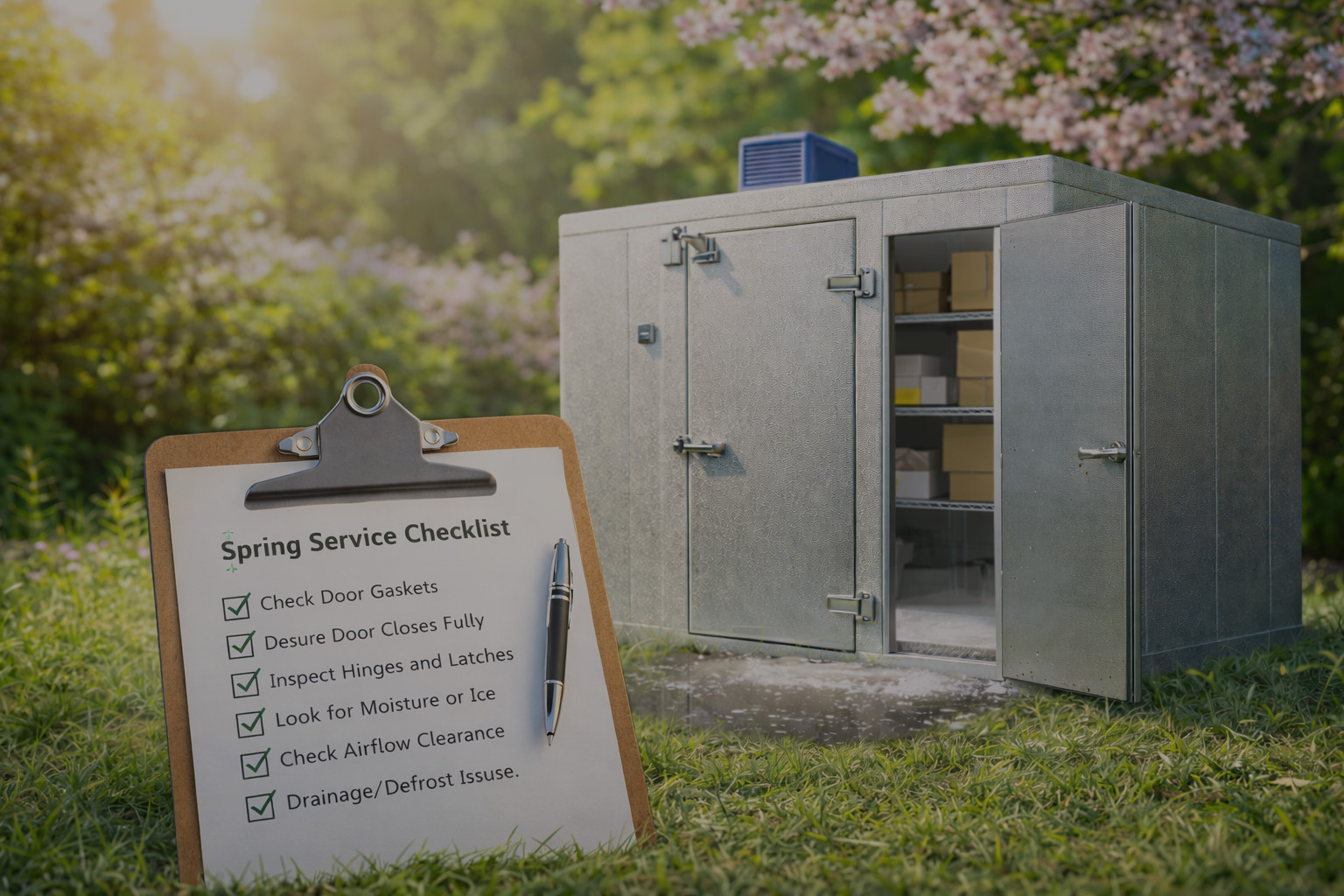
Spring is the perfect time to give your walk-in cooler or freezer a quick checkup.
Why? Because once warm weather and humidity arrive, small issues get worse fast. Door seals leak more, condensation becomes more noticeable, systems run longer, and recoveries slow down—right when you need consistent performance the most.
The good news is you don’t need a full service call to catch the early warning signs. In many cases, a simple walkthrough can help you spot problems before they turn into downtime, energy loss, or product risk.
Here are six practical things to inspect before warm weather hits.

1) Check Door Gaskets for Cracks, Gaps, or Stiffness
Your gasket is the main barrier between conditioned cold air inside and warm humid air outside. When gaskets start to fail, the walk-in has to work harder to maintain temperature—especially during summer traffic.
What to look for:
- cracks or tears in the gasket material
- corners pulling away from the frame
- flattened or stiff sections
- gaps where the gasket no longer compresses evenly
- moisture or light frost around the door opening
Quick tip:
Close the door on a piece of paper or a dollar bill and tug it out. If it slides out easily, that area may not be sealing tightly.
2) Make Sure the Door Closes Fully Every Time
Many walk-in performance issues aren’t caused by refrigeration—they’re caused by a door that doesn’t fully close and seal consistently.
When the door doesn’t shut tight, warm air and humidity enter constantly. In coolers, that can cause sweating or condensation. In freezers, it can cause frost and ice buildup.
What to check:
- Does the door close smoothly without rubbing?
- Does it latch without needing force?
- Does it ever bounce back open slightly?
- Does it require a “push” at the end to fully seal?
If your staff has developed the habit of “slamming it shut,” it’s a sign something needs attention.
3) Inspect Hinges, Closers, and Latches for Wear
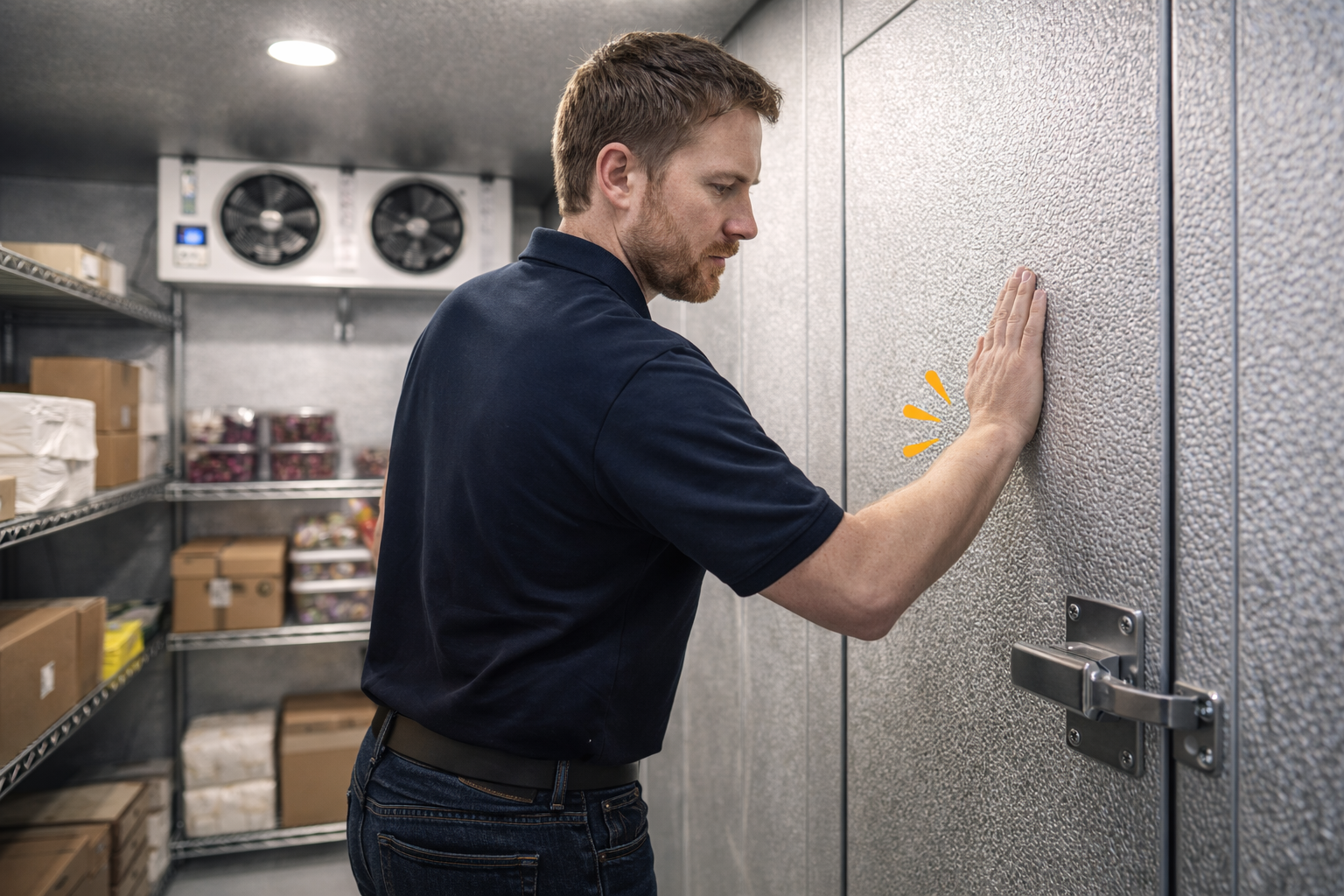
Walk-in doors are heavy and used all day long. Over time, hardware wear can create alignment issues that lead to air leaks—even if the gasket looks fine.
Early warning signs include:
- door sagging or rubbing during closing
- latch not lining up cleanly with the strike
- handle feels loose
- closer slams or closes too slowly
- door closes but doesn’t pull tight against the gasket
Catching these early can prevent more expensive repairs later, and it protects the door seal from premature wear.
4) Look for Moisture or Ice at the Entrance
The entrance area tells you a lot. It’s the first place you’ll see the effects of humidity, traffic patterns, and sealing issues.
In coolers, watch for:
- wet floors near the entry
- condensation on the frame
- water streaks or pooling along the threshold
In freezers, watch for:
- frost buildup near the door opening
- ice developing at the threshold
- “snowy” buildup at the bottom corners
If you see repeated moisture or ice at the entrance, it’s usually a sign that warm air is getting in through small gaps or heavy door-open time.
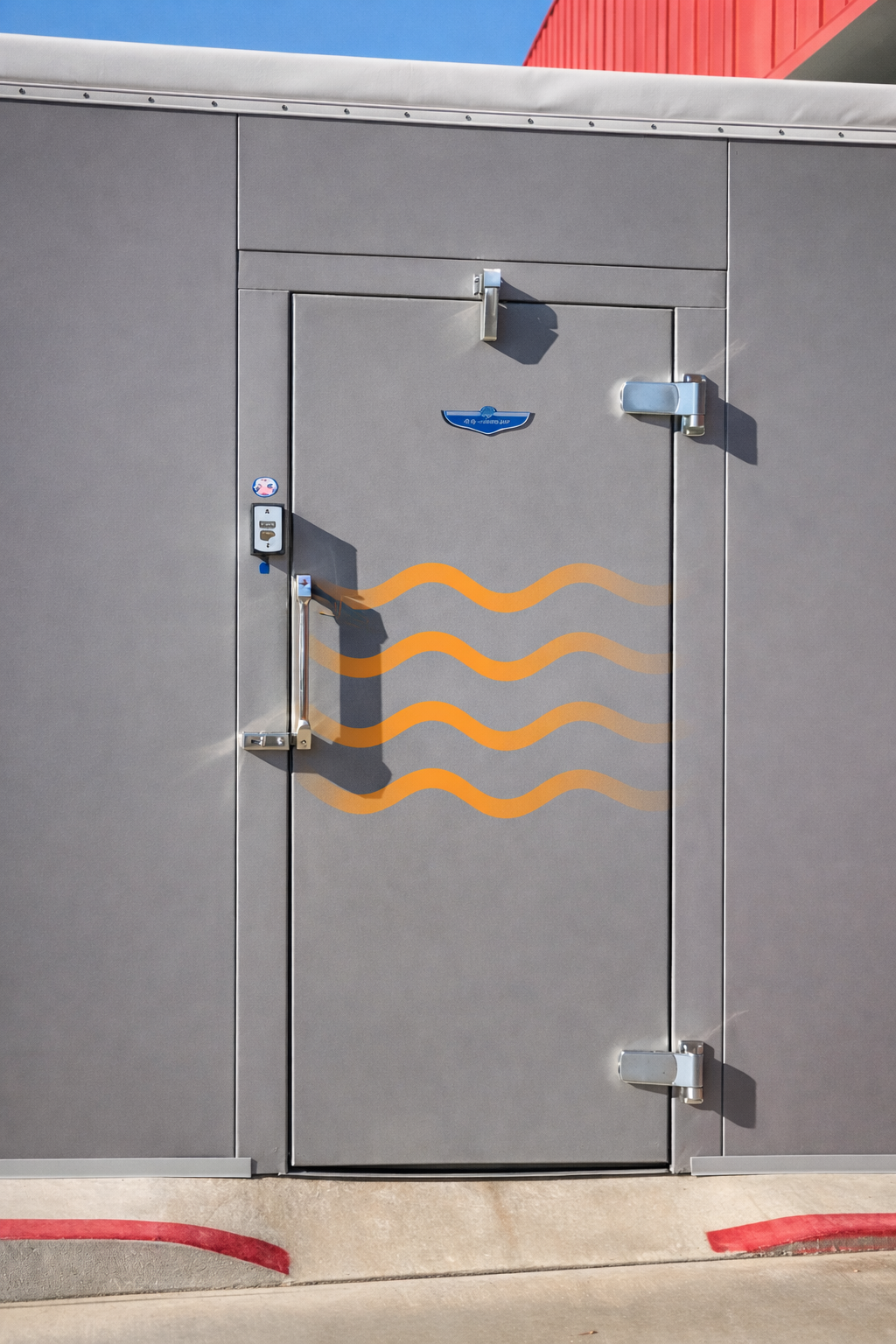
5) Check Airflow Clearance Inside the Walk-In
Spring is a great time to evaluate how product is being stored. As your season picks up, it’s common for walk-ins to get packed tighter and tighter—which reduces airflow and slows recovery.
What to look for:
- product stacked too close to the evaporator fans
- shelving or product blocking airflow paths
- inventory packed wall-to-wall with no space between stacks
- areas where product always seems warmer or colder
Best practice:
Leave breathing room around the evaporator and allow gaps between product so cold air can circulate evenly.

6) Look for Signs of Drainage or Defrost Issues
Drainage issues often start small but turn into big headaches during busy seasons. If water can’t drain properly, you may see pooling, ice buildup, or moisture that impacts sanitation and safety.
Warning signs include:
- ice or slush under the evaporator area
- repeated wet spots that return after cleaning
- small pools forming on the floor
- water appearing outside the box after warmer periods
If you catch these early, you can prevent slip hazards and protect the walk-in interior.

Final Takeaway: A Short Spring Check Can Prevent Summer Problems
Warm weather doesn’t cause walk-in issues—it exposes them.
A quick spring checklist helps you catch:
✅ sealing problems
✅ door alignment issues
✅ humidity intrusion
✅ airflow restrictions
✅ early moisture and drainage concerns
Taking 10 minutes now can prevent the “emergency call” later.